Culture / Ancient Cities
Tlos, the Hill City Crowned by a Fort Built From Its Own Ruins
A Lycian hill city that may already appear in Hittite records, with a hero's tomb in the cliff, a restored theatre and an Ottoman fort on the summit. Climb the acropolis first and the rest of the site lays itself out below you.

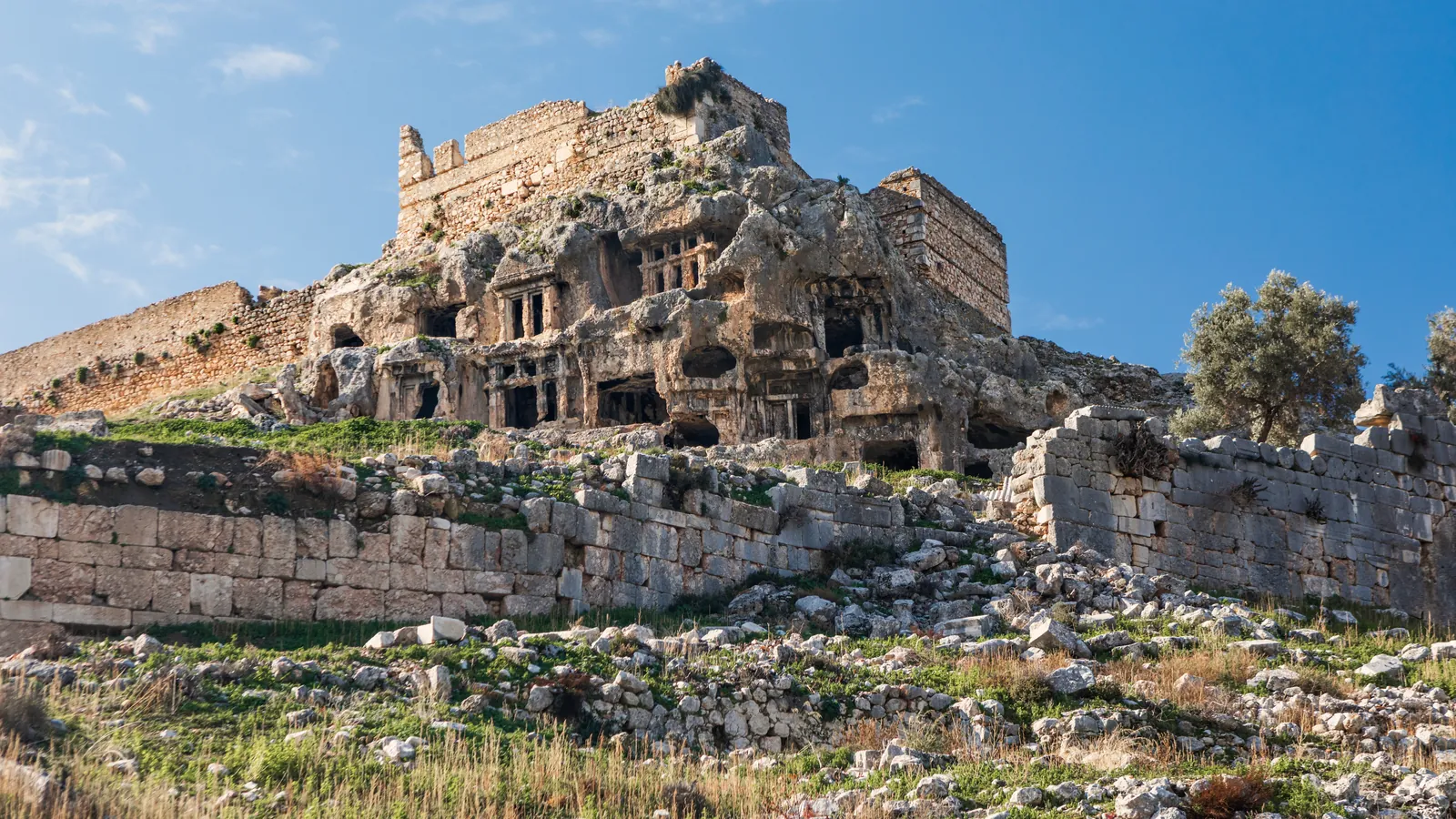
The path up the acropolis at Tlos begins among sarcophagi. They stand free on the slope, and above them the cliff is cut with the doorways of house-type tombs, beams and gables worked in stone to look like timber. At the top sits a fort that appears to be the oldest thing on the hill. It is the newest.
The fort belongs to Kanlı Ali Ağa, Bloody Ali, a nineteenth-century valley lord who wintered here and built his walls from the ancient blocks lying around him. Tlos was still inhabited in his day, which cannot be said of most Lycian cities. The others had mostly emptied long before.
The land of Dalawa
Hittite texts of the Late Bronze Age name a land called Dalawa, and Tlos, Tlawa in the Lycian language, is usually identified with it. At Yalburt, near Konya, the Great King Tudhaliya IV had it carved that he came down to Dalawa and that the women and children of the land bowed before him. Whether they stayed bowed is not recorded. Finds from the hill go back to the Neolithic, so the place was already old when the king arrived.
Tlos came into its own with the Lycian League, formed in 168 BC. It was one of six cities allowed three votes, alongside Xanthos, Patara, Pınara, Olympos and Myra. Under Rome it was styled the most brilliant metropolis of the Lycian people, and the road guide cut at Patara in the first century AD shows seven roads converging on it. The city later became a seat of bishops, and the ministry's account has the church still active in the twelfth century.
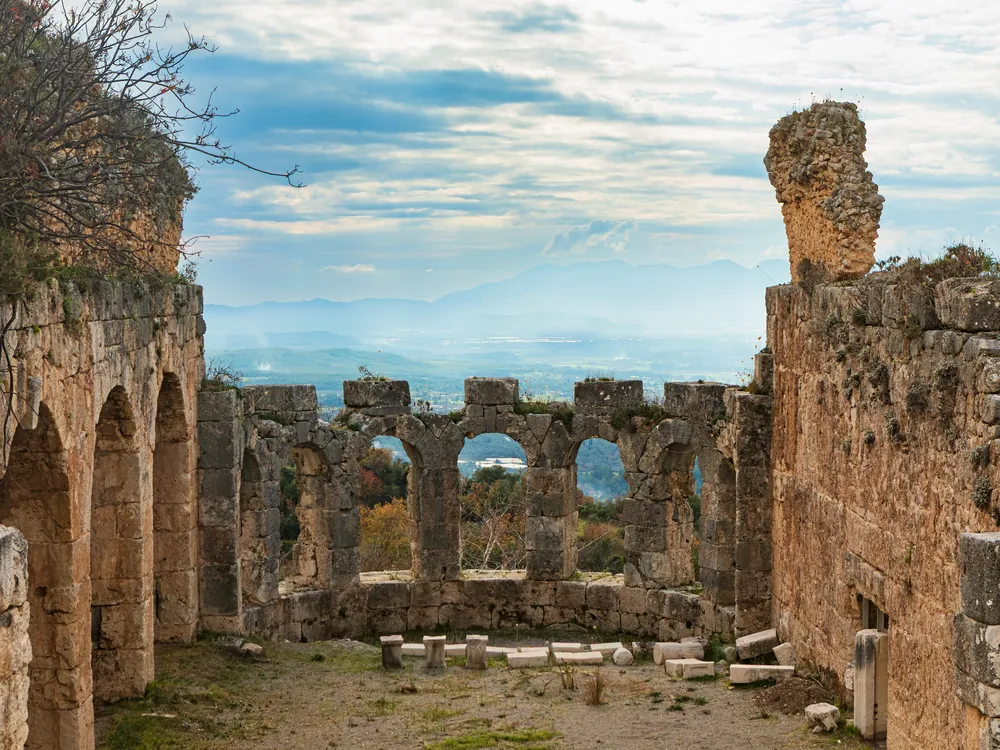
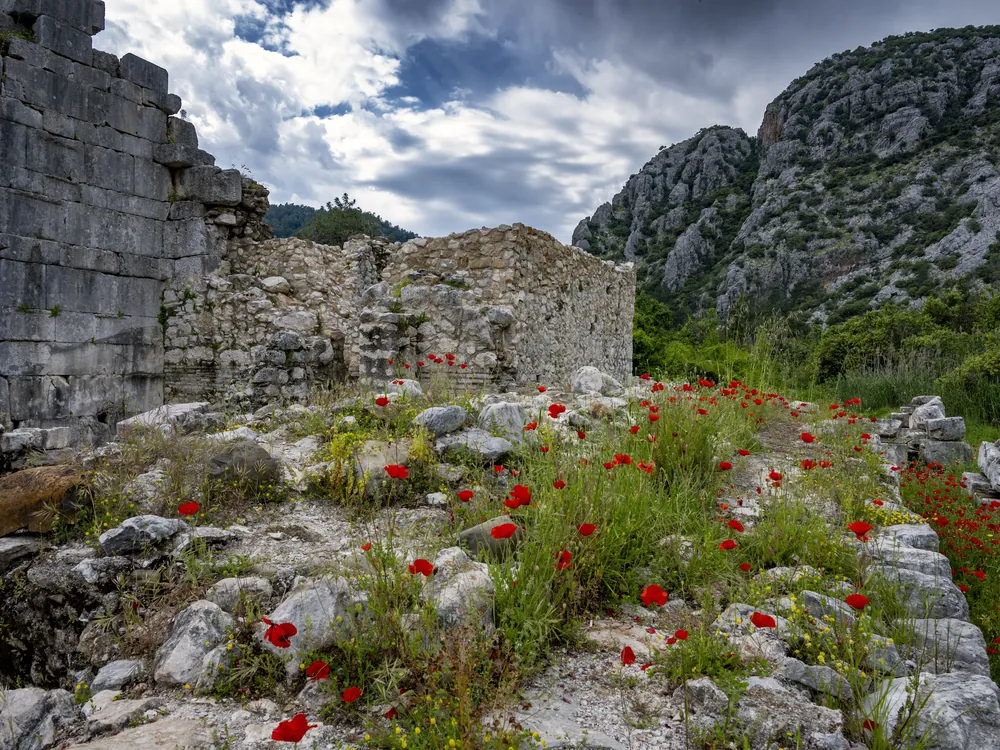
Stadium at the gate, theatre in the trees
The stadium comes first, cut into the foot of the hill beside the entrance. It is Hellenistic in origin and was altered under Rome. The theatre stands on the eastern slope among the trees, and it has been restored almost entirely from its own original stones. The Muğla governorate puts its seating at about 8,500. Opposite it lie the Roman baths and a basilica.
A hero's tomb with a faint horse
The Tomb of Bellerophon is cut into the north face of the acropolis, a temple-fronted tomb with a relief of the hero riding Pegasus on its porch wall. It dates to the third quarter of the fourth century BC. In the myth a Lycian king sent Bellerophon to kill the Chimaera, and Athena supplied the horse. Tlos claims the pair as residents. The relief is faint, and the approach is steep and rough, along a path under the cliff.
Editor's picks
- Climb the acropolis first.The path starts among the sarcophagi, and from the summit the stadium and theatre sit below you with the valley beyond. Everything else on the site makes more sense afterwards.
- Look for Bellerophon on the cliff.Take the lower path under the rock tombs and find the winged horse on the porch wall.
- Read the fort's walls.Ali Ağa's masonry is a patchwork of older blocks, and the joins between the Lycian, Roman and Ottoman work are easy to find.
- Finish in the theatre.The restored seating faces the mountains, and the stage building has been rebuilt with stones found on the spot.
- Eat in Yaka village.Trout is the local dish, and a few cafés and restaurants stand by the car park.
- Add Pınara or Saklıkent.Pınara is the other hill city of this valley, and Saklıkent Gorge is a short drive along the same road.
Insider notes
Entry is ticketed at the foot of the hill. The gate opens at 08:30, and closing time shifts through the year, so check the posted hours before you set out. Excavation and restoration run all year, so expect a fenced trench or a roped-off stretch somewhere. The climb is short but steep over worn steps and needs shoes with grip.
On the outside of the baths' south wall a snake and staff is cut into the stone, the old sign of medicine.
Send this to whoever you would go with. WhatsApp
How to get to Tlos
Dalaman is the closest airport, about 1 hour 30 minutes by road. The site stands above Yaka village, off the Fethiye to Antalya road, with a car park near the entrance. Dolmuş minibuses run from both Fethiye and Kalkan, so ask the driver where to get down, and expect the last stretch to be on foot or by taxi. Flights from Europe and Istanbul are covered in Getting there.
Below the fort, the stadium seats are still cut into the hillside, facing open ground.