Culture / Ancient Cities
Ancient Patara, the League Capital That Lost Its Sea
A triumphal arch, a council chamber and one of the oldest lighthouses in the world stand behind the dunes of Patara, left inland by a river. Walk the stones before the sand and most of the site is yours.
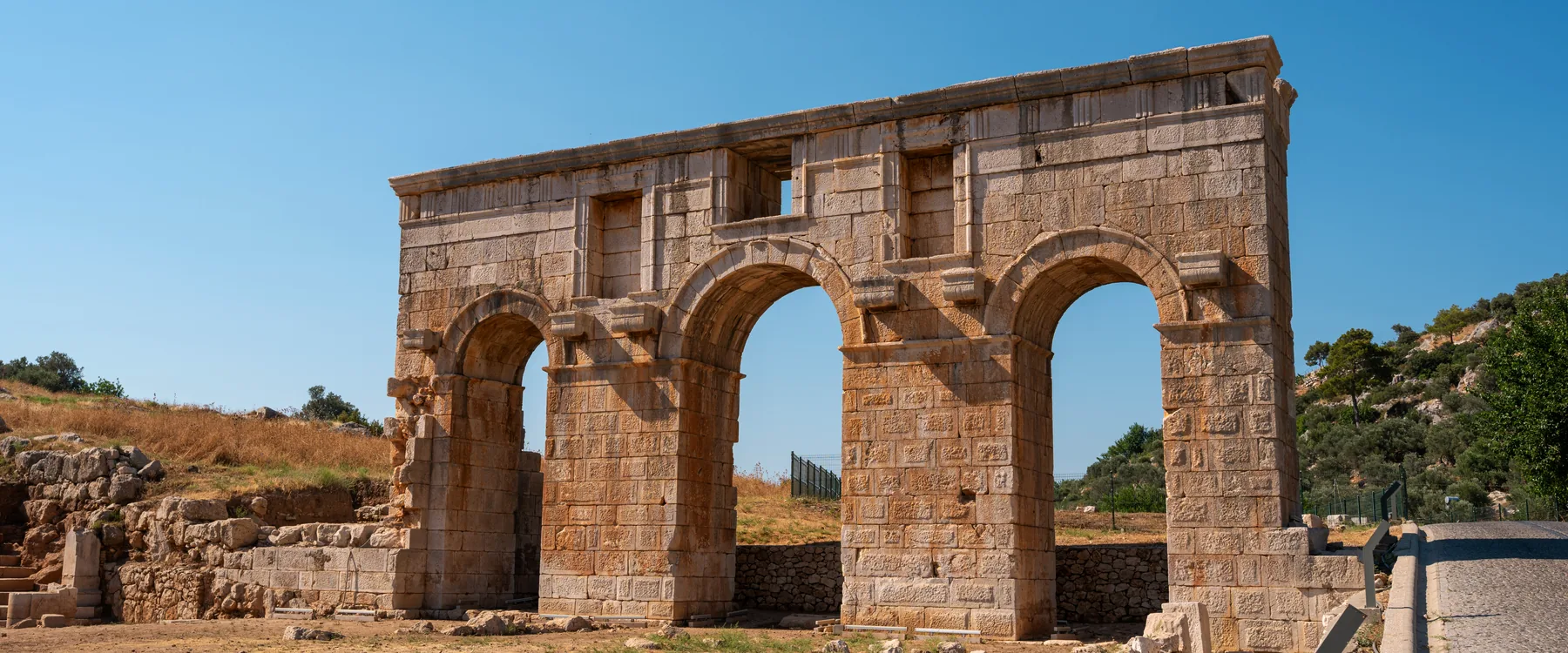
The first monument at Patara is an arch. It stands in open scrub, three openings wide, and visitors still walk through it to reach the city, as they have for close to two thousand years. It was built around the turn of the second century for a Roman governor, Mettius Modestus, and from the gate nothing suggests that a capital lies behind it.
The surprise is what is missing. Patara was a harbour town, and the harbour is now a reed bed. The lighthouse that once brought ships in stands inland, well away from the nearest water.
A harbour the river filled in
Patara began as the port of Xanthos, the great Lycian city up the valley. Silt carried down by the Eşen river closed the harbour mouth over the centuries, and by the medieval period the ships had stopped coming. Before that, Patara had grown into the seat of the Lycian League, the federation of Lycian cities, and in its votes it ranked among the strongest, with three, the highest a member could hold. Pines and dunes now cover what the river did not.
The room where Lycia counted its votes
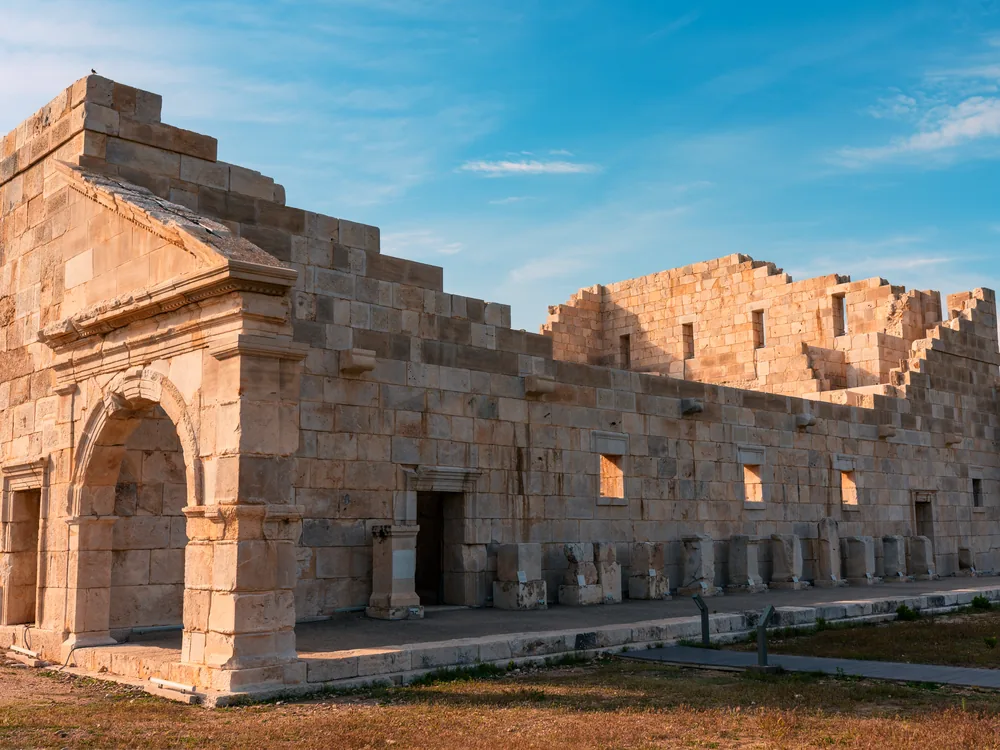
The council house sits on the slope near the theatre. It was roofed and held about 1,400 people, and it is where delegates from the League cities argued and voted. It stands in part today, with some of it rebuilt.
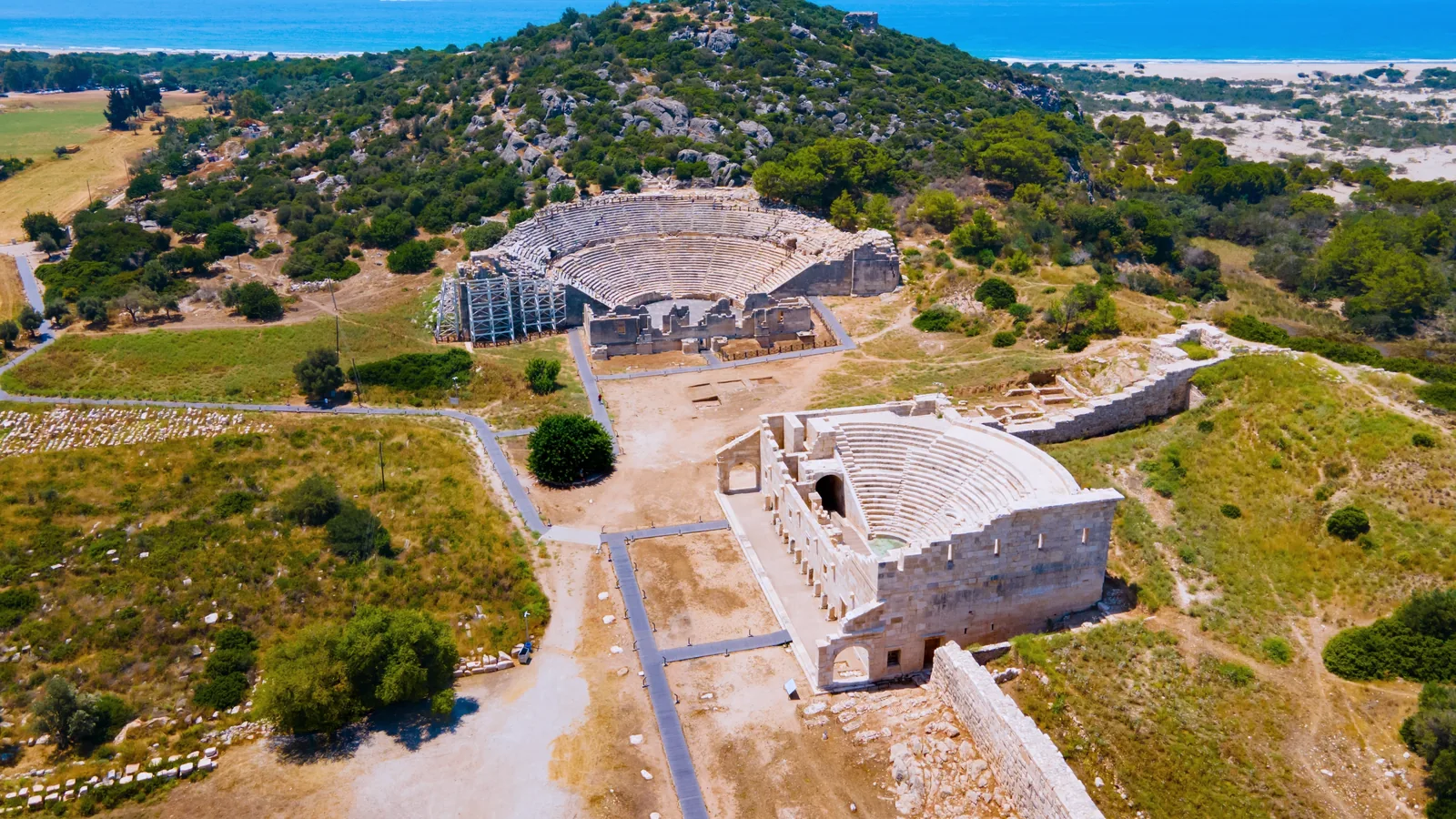
Climb the slope behind it to the theatre and the picture completes itself. The seats face the old city and the sea that is no longer there, and from the top row the whole outline of Patara can be read at once: reed bed, dune, pine and the pale line of the beach.
Stones first, then sand
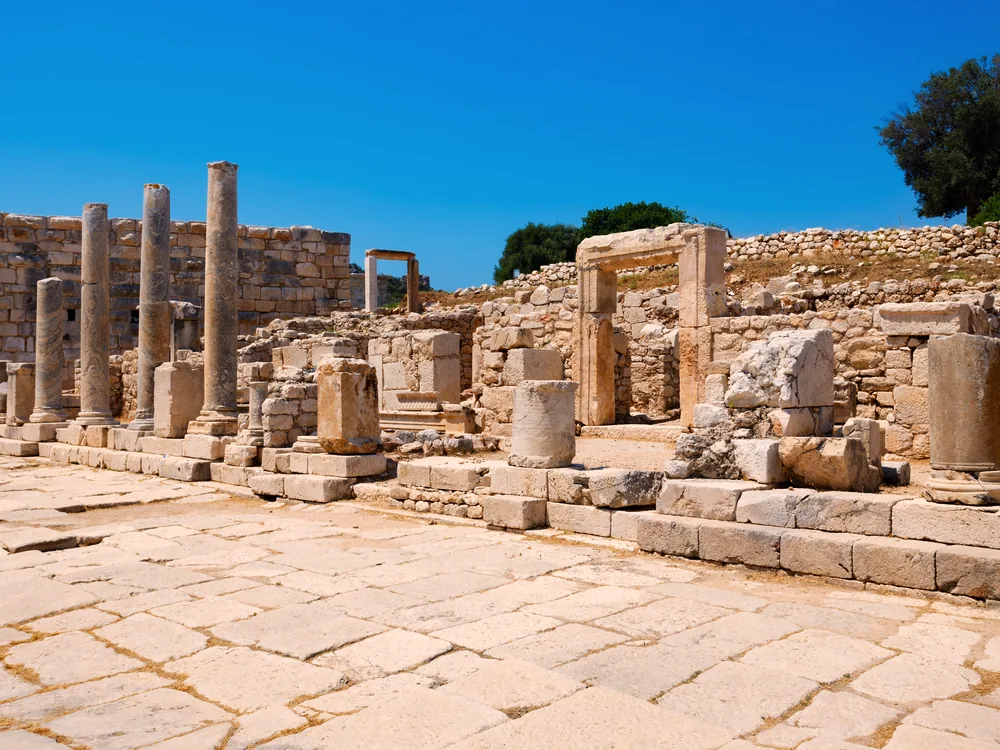
Almost everyone crosses the site on the way to the beach and keeps going. That is the reason to stop. In the cool of the morning the ruins are quiet, the stone is pale and the light low. The ticket covers both, so nothing is lost by taking them in this order. The ground is flat but uneven, and there is almost no shade.
Editor's picks
- Walk through the Modestus arch slowly.It frames the approach to the city and gives the walk its scale.
- Climb the theatre.From the top row you see the site, the dunes and a strip of sea in one look.
- Sit in the council house.Count the rows, then think about 1,400 people deciding Lycian policy in one room.
- Find the lighthouse.Inscriptions link it to Nero's reign, and it is regarded as one of the oldest surviving lighthouses anywhere. Look for the sea from its base, then work out how far it has gone.
- Look for the granary.Built under Hadrian, it held Anatolian grain waiting for ships to Rome, a reminder that Patara earned its living as a port.
- Drive on to Xanthos and Letoon.Both are a short run inland and sit on the UNESCO list (1988). Patara was Xanthos's harbour, and the three make one story.
- Finish on the beach.Same ticket, and the dunes begin just beyond the ruins. See our Patara Beach page for the long sand itself.
Insider notes
Bring water and a hat. The ticket covers the ruins and the beach, and the Museum Pass (Müze Kart) is valid at the entrance, so bring it if you have one.
Tradition names Patara as the birthplace of Saint Nicholas, though his church and tomb are at Demre, farther east along the coast. Patara also appears in the Acts of the Apostles, where Paul changes ships here on his way to Syria.
Nearby Gelemiş is a small village of family pensions and a few simple restaurants, enough for lunch and a bed, without the pace of Kalkan. Set aside half a day for the stones and let the beach take the rest.
Send this to whoever you would go with. WhatsApp
How to get to Patara
Dalaman is the closest airport, about two hours by road. Kalkan is the nearest town, with a dolmuş running to Gelemiş, and a car makes it easy to add Xanthos and Letoon. Flights from Europe and Istanbul are covered in Getting there.
The sea went, and the lighthouse stayed to prove it was ever here.