Culture / Ancient Cities
Pınara, the City on the Round Rock
A Lycian hill city above the Xanthos valley, with a cliff of tombs and a theatre nobody has restored. Most mornings the hill is yours.
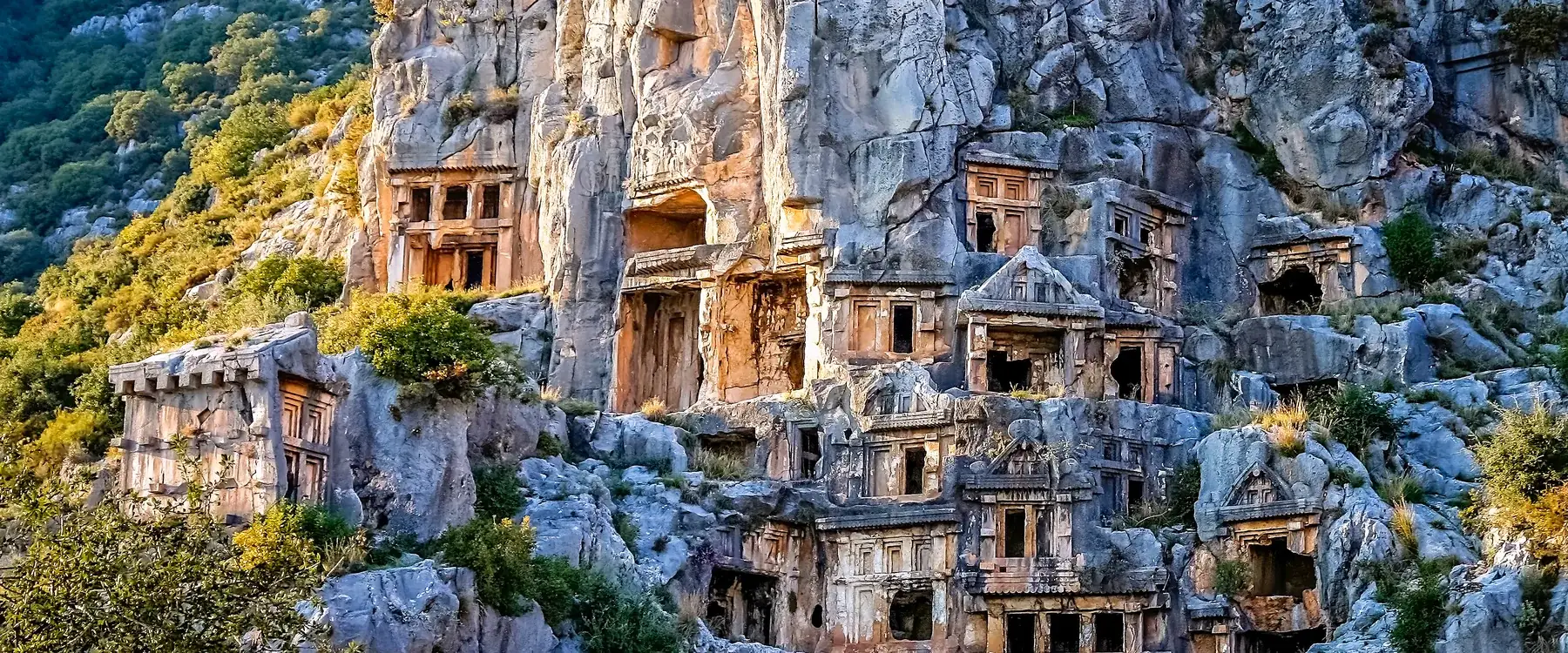
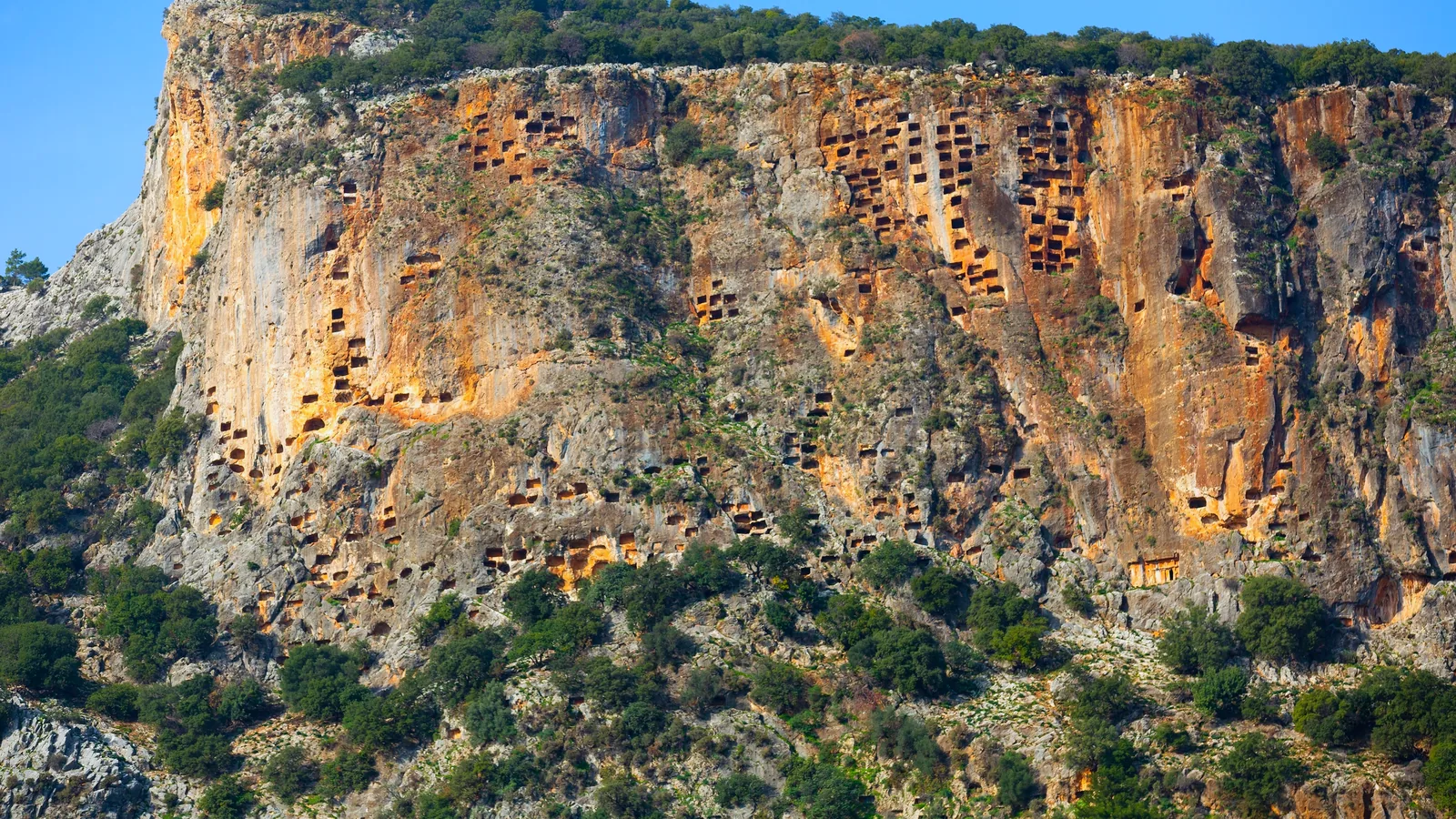
The tarmac gives out below Minare, and the rock arrives before the ruins do. It is a rounded mass of pale limestone that stands apart from the slope behind it, and its steep eastern face is pitted with hundreds of dark openings. Most are cut to look like timber houses, with doors and roofs worked in stone.
That rock is the reason for the city and for its name. Pınara comes from the Lycian word for round, and the settlers who left Xanthos in the fifth century BC are said to have chosen the hill for exactly that shape. A British traveller, Charles Fellows, identified the ruins in 1839. Most of the site is still unexcavated, and it shows.
A daughter city on the slope of Babadağ
Pınara began on the upper acropolis, the round rock itself, and spread to the lower acropolis when the hill ran short of room and an easier slope was needed. It held real weight in the Lycian League, where it was one of six cities with three votes. Earthquakes struck in 141 and again in 240. The city was rebuilt once on a benefactor's money, and people stayed on into the ninth century.
What is left on the terraces
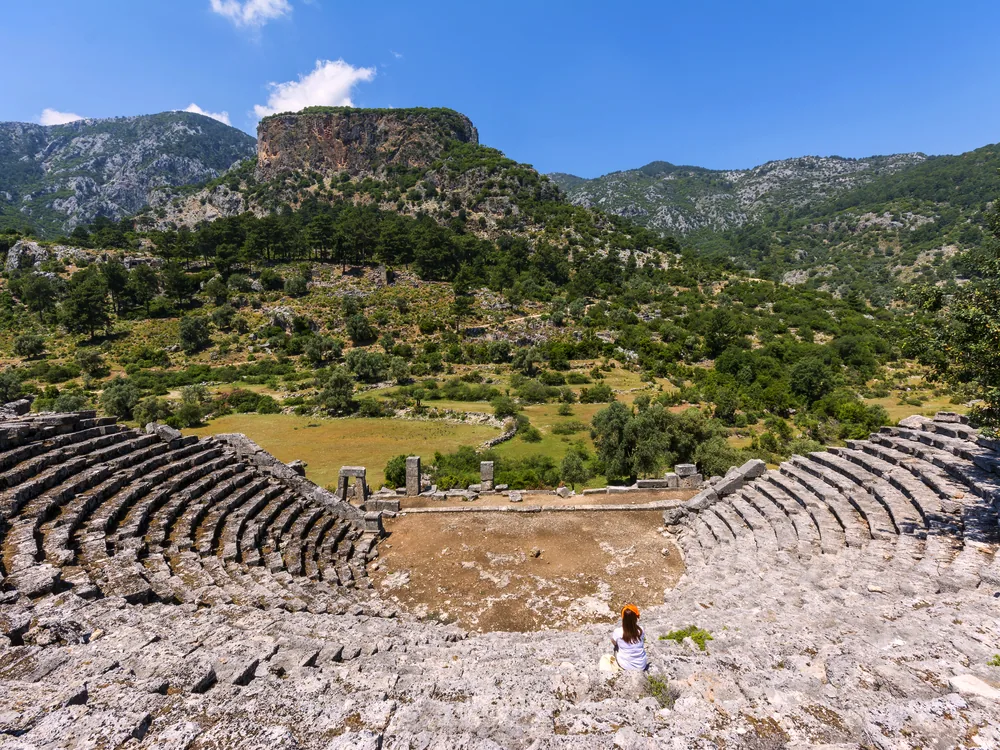
The theatre is the anchor, a second-century BC Hellenistic design built into the slope, with room for roughly three thousand and one of the better-preserved unrestored theatres in Turkey. A second, smaller one lies in ruins nearby. Around them, across a series of terraces, are an odeon, an agora, baths, temple foundations and the remains of a large church, with pomegranate and olive growing between the stones.
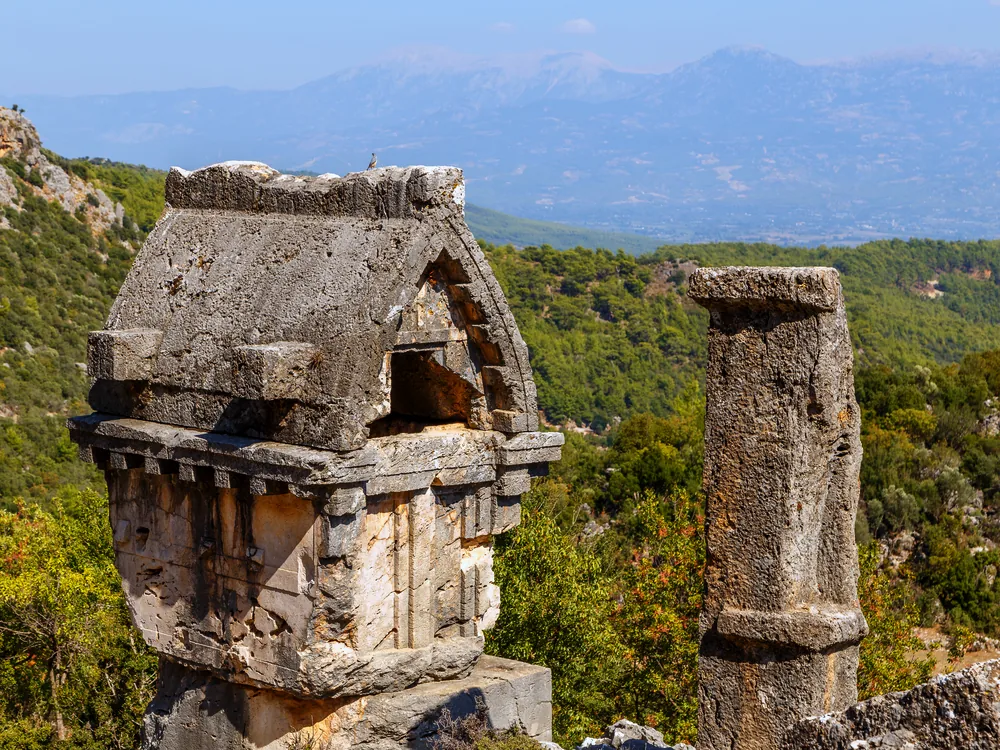
The tombs hold the detail. One house-type tomb carries a relief of a walled city. It is thought to show Pınara itself, and the tomb may have belonged to a local prince. Painted markers on the rock lead from the car park to the main tombs, the theatres and the temples, which is as close as the site comes to signage.
A hill with no services
Tlos, up the valley, takes most of the visitors. Pınara takes the ones who read the map twice. The loudest sound here is your own boots on stone, and the morning sun lands squarely on the tomb face.
Service is minimal. There is a car park with a shelter and a toilet, and nothing else. Shade is thin once the sun climbs, so water and a hat do the work a café would elsewhere.
Editor's picks
- Follow the painted markers first.They link the main tombs, theatres and temples, and the paths between them fade quickly without them.
- Find the tomb with the walled city.It is the only portrait of Pınara the city left of itself.
- Sit in the upper rows of the theatre.The view runs back across the stage to the cliff, and the scale of the place makes sense from there.
- Climb the upper acropolis only if you are steady on loose rock.It is the oldest part of the city and the roughest, and the view down the valley is the reward.
- Bring lunch.There is nowhere to buy it, and the terraces are good places to eat it.
- Pair it with Xanthos and Letoon, or with Tlos.Xanthos and Letoon have been on the UNESCO list since 1988 and need at least two hours. Tlos has trout restaurants in the village below.
Insider notes
Wear shoes with grip, carry water and a hat, and fill the tank in Fethiye before you set off. The last stretch of road is unpaved, so ask the car hire desk whether your vehicle is allowed on it. Entry is free, and the ministry lists the site as open every day from 08:30 to 18:00. For photographs, the tomb face looks east, which makes the first hours of the day the best ones.
Allow at least two hours, longer if you wander. The site is spread out, but the best parts sit closer together than the map suggests.
Send this to whoever you would go with. WhatsApp
How to get to Pınara
Dalaman is the closest airport, about an hour and a half by road, roughly 90 km. Drive through Fethiye and follow the D400 towards Kaş for about 35 km, then take the brown signs for Pınara through Minare. The dolmuş from the Fethiye bus station reaches Minare, which leaves about 2 km on foot or by taxi. Flights from Europe and Istanbul are covered in Getting there.
Pınara is what a Lycian city looks like when nobody has tidied it for the visitors.