Culture / Ancient Cities
Xanthos, the Capital That Chose Fire Over Surrender
Above the Xanthos valley, the greatest city of Lycia keeps its pillar tombs, its long inscription and the memory of two sieges. Go early in the day and the hills are almost yours.
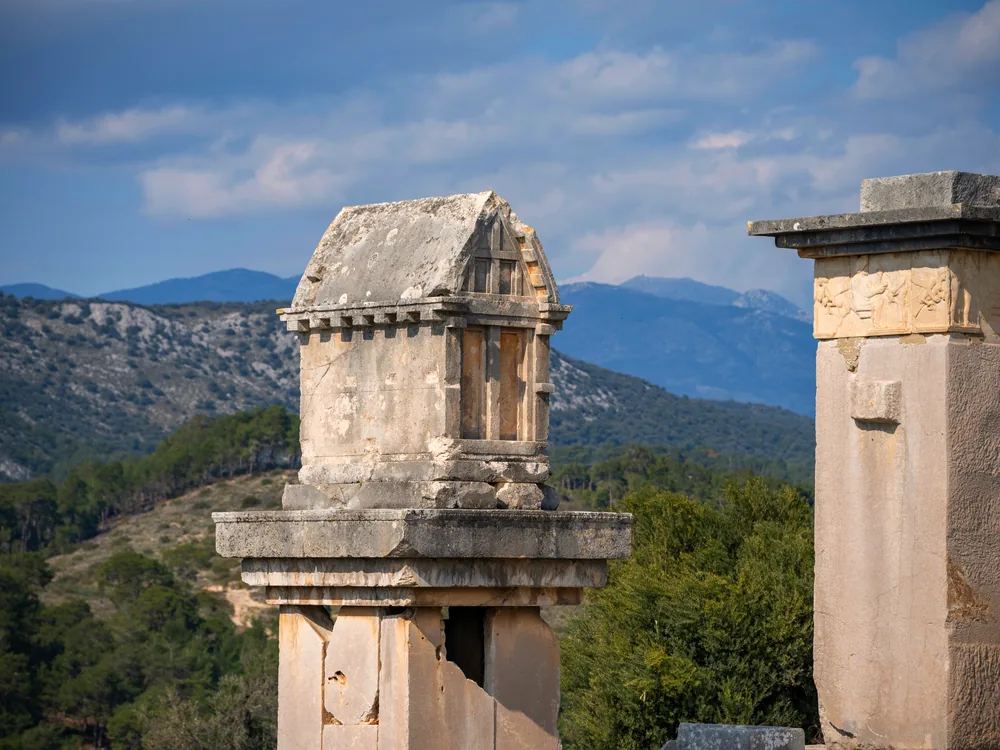
The shape you remember from Xanthos is the pillar tomb: a stone shaft taller than a house, with a burial chamber set on top like a lid. Several stand on the hill, weathered limestone against a wide sky, and they give the site its silhouette.
This was the capital of Lycia, and it was destroyed twice by its own choice. In the sixth century BC, according to Herodotus, the Xanthians faced the Persian general Harpagos, burned their families and treasure on the acropolis, and rode out to die. About five hundred years later they did it again when Brutus laid siege. Historians argue over the details. The city wanted to be remembered this way, and it was.
A city on two hills
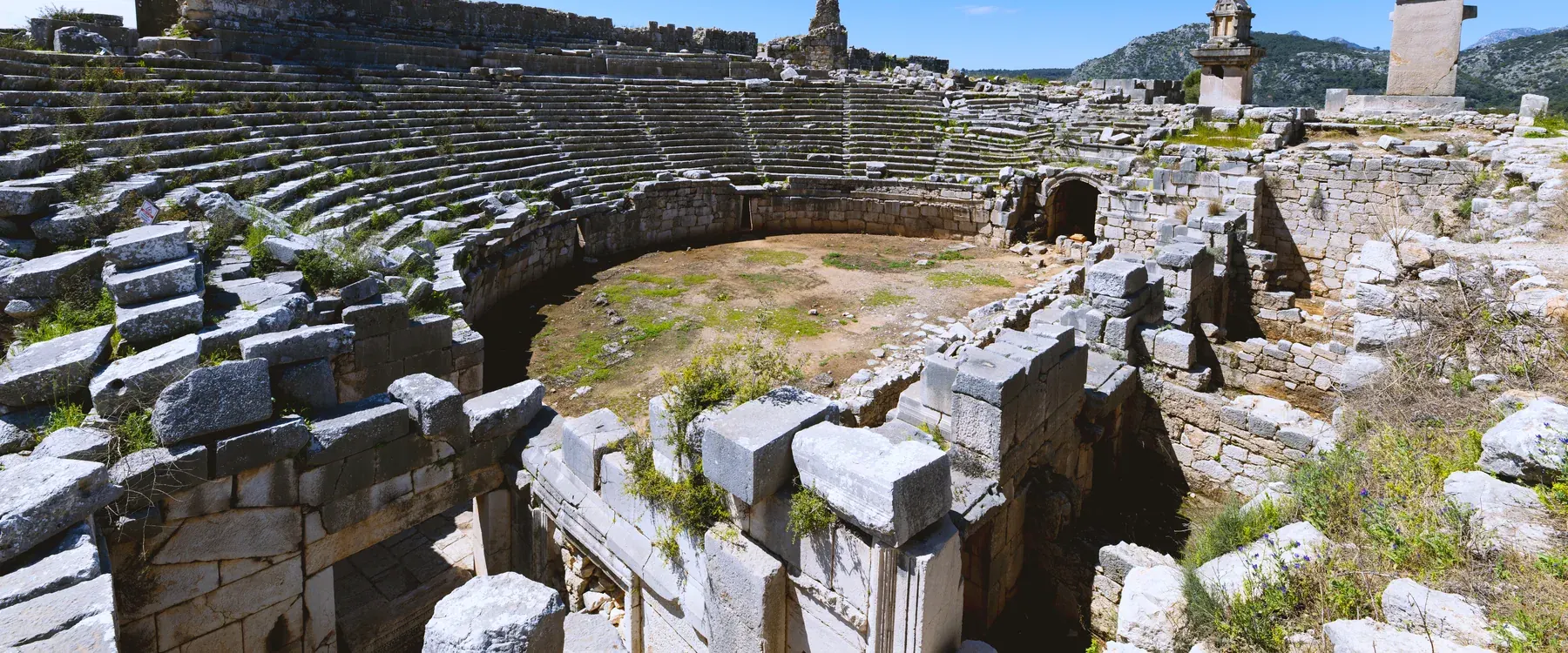
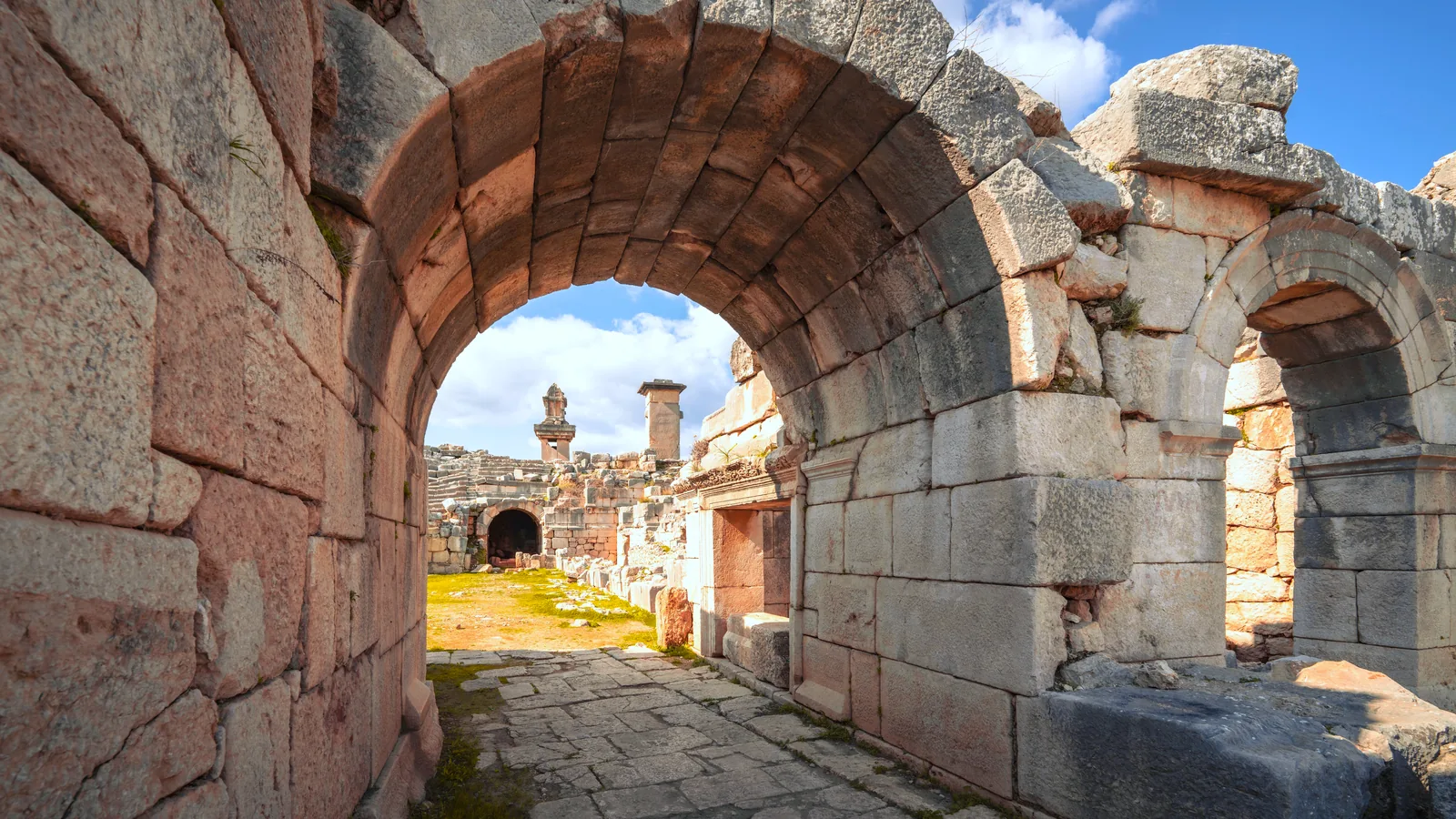
Xanthos spreads across two hills above the river valley. The Lycian acropolis lies to the south. The Roman acropolis sits to the east, with a Byzantine basilica whose floor still carries mosaics. Between them stand the Roman theatre, well preserved, and the pillar tombs. Nothing is laid out as a tidy route. Paths run along walls and fallen blocks, and the valley opens behind every turn.
UNESCO listed Xanthos with Letoon in 1988. The sanctuary is less than two kilometres away and belongs on the same day. Xanthos, Letoon and Patara make a natural day trip, which is why late morning tends to be the busiest stretch, and why the first hour after opening is the one to take. Bring your own water and a hat.
What stayed and what went to London
Start with the Xanthian Obelisk, the inscribed pillar. Its text runs in Lycian, Greek and Milyan, and it is a reminder that this was a literate, self-assured culture. The Harpy Tomb stands beside the theatre, another tall pillar with a chamber on top.
The finest sculpture left in the nineteenth century. The reliefs of the Harpy Tomb and the whole Nereid Monument are in the British Museum, and copies fill the gaps on the tomb. Know that before you arrive and the site makes more sense: you are looking at the frame without some of its best pictures. What remains is still enough to explain why Xanthos mattered, and it is easier to read without a crowd.
Editor's picks
- Begin at the inscribed pillar.It sits near the entrance end of the site and sets the tone. Read the stone before you read about it.
- Walk on to the theatre and the Harpy Tomb.The theatre is the best-kept building here, and the tomb beside it shows how the Lycians buried their dead high and in public.
- Climb the Lycian acropolis.This is the hill of the fire story. See how the city sat on its ground and where the fighting would have ended.
- Cross to the Roman acropolis and the basilica.The mosaic floor is the surprise of the second hill.
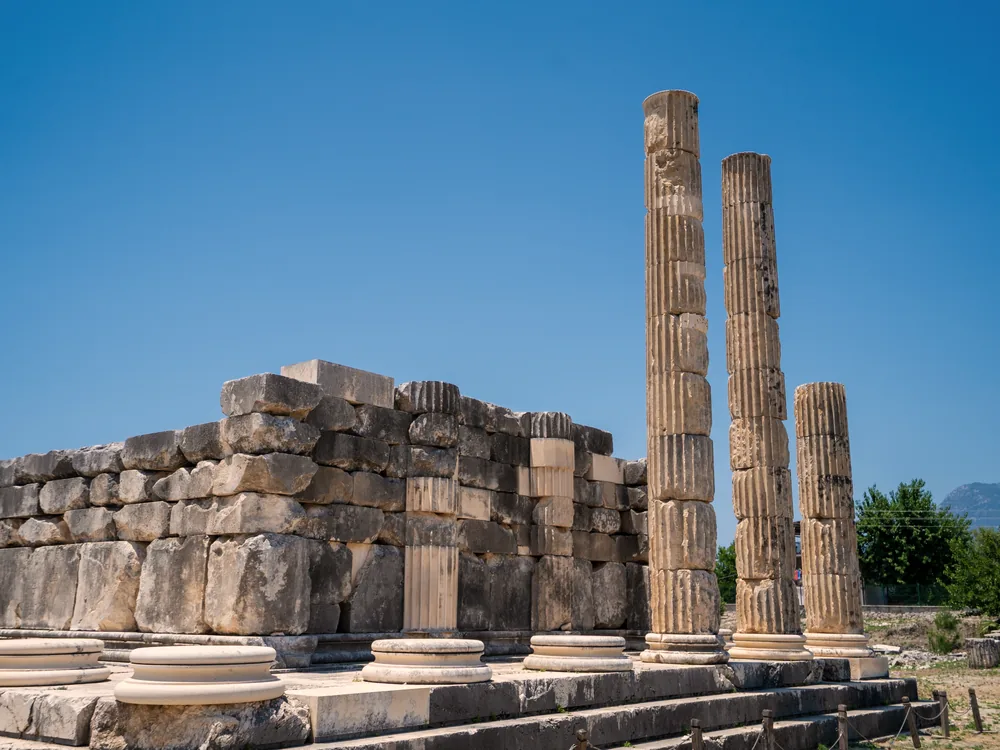
- Drive on to Letoon.It is less than two kilometres away. Three temples stand side by side in a hollow where the foundations are often flooded and the frogs are loud.
- Finish on the sand at Patara.Go in the evening when the wind drops and the light turns copper. The beach runs for roughly 18 kilometres, and the Council House behind the dunes is where the Lycian League voted.
- Eat in Kalkan's old harbour.Fish and meze above the water, a short drive back along the coast.
Insider notes
Allow at least two hours, and three if you climb both acropolises. The ground is uneven with uphill stretches, so wear shoes with grip. The site is open all year with an entry fee, and the Museum Pass (Müze Kart) is valid at the entrance. Opening hours change from time to time, so check the current times before you set out.
The Lycian Way passes through the site, which suits anyone arriving on foot. Most people will want a hire car or a driver from Kalkan, about twenty minutes away. Local buses and dolmuş run to Kınık but infrequently, and the ruins lie just north of the village. If you have a second day, Pinara and Tlos are each about an hour from Fethiye.
The story of the two sieges is Herodotus's, and it reads better the evening before than on the hill. Walk the site as a place, not as a proof.
Send this to whoever you would go with. WhatsApp
How to get to Xanthos
Dalaman is the closest airport, about an hour and a half by road, roughly 92 kilometres. Kalkan is the natural base, about 20 minutes from the site, with Fethiye about an hour and a quarter, and a car lets you link Xanthos, Letoon and Patara at your own pace. Flights from Europe and Istanbul are covered in Getting there.
Most ruins were abandoned. Xanthos chose its ending, and the valley has kept the choice.