Places / Beaches
Patara Beach, the Long Sand Where Lycia Held Its Parliament
Eighteen kilometres of open sand lie beside the ruins of a Lycian capital, with almost nothing built on them. Walk far enough from the entrance and the beach is yours.
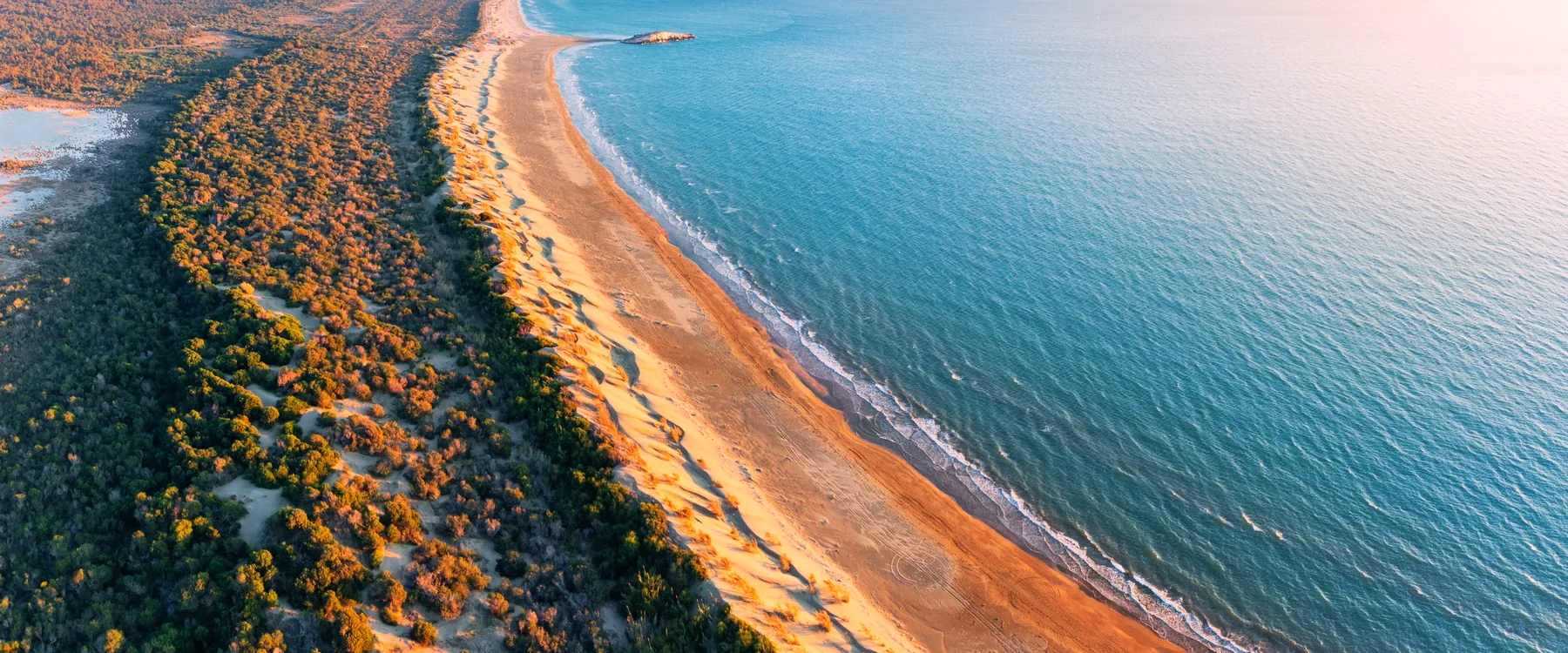
The road down from the village runs flat between reed beds and old stone, and for a while there is no sign of a beach at all. Then the track climbs a low rise of sand and the shoreline opens out: one pale line running west until it dissolves in haze. The first impression is of space, and the second is of heat. The walk from the entrance to the water is long enough to feel in the soles of your feet, and sandals are not optional.
Kaputaş is a cove, and Patara is a distance. It is also a place with a past, because the sand sits beside the ruins of the city that once hosted the Lycian League, and you pass the triple-arched Arch of Modestus on the way to swim.
Dunes, a marsh and a harbour that silted up
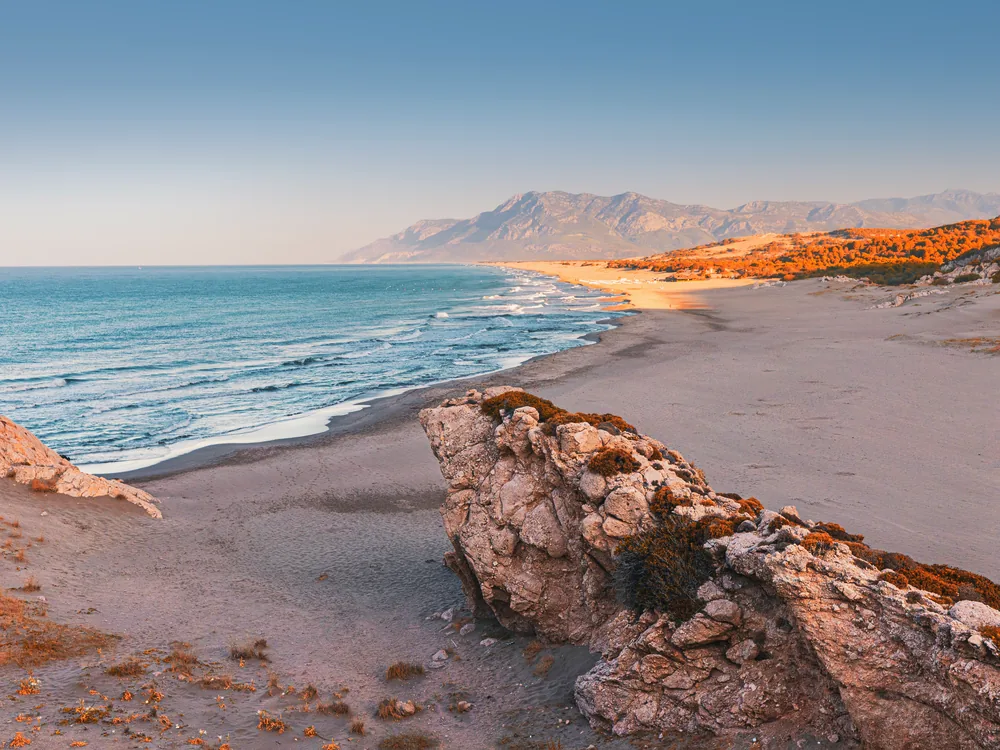
Patara stands where the Eşen River once met the sea. The river shifted and the ancient harbour filled in, and what remains is a marsh of reeds and still water behind the dunes. The dunes rise in pale ridges held by juniper and sea daffodils, and at dawn and dusk the marsh fills with the sound of frogs and birds. Between the sand and the village stand the arch, the colonnaded street, the theatre and the council house, where delegates of the Lycian League met. Patara held three votes there, the most any single city was allowed. It is also the traditional birthplace of St Nicholas, the fourth-century bishop behind Santa Claus.
The beach is protected twice, as part of an archaeological area and as one of the main nesting grounds for loggerhead turtles on the Turkish coast. There are few sunbeds and almost no buildings. It feels like a coastline rather than a resort frontage.
Walk past the umbrellas
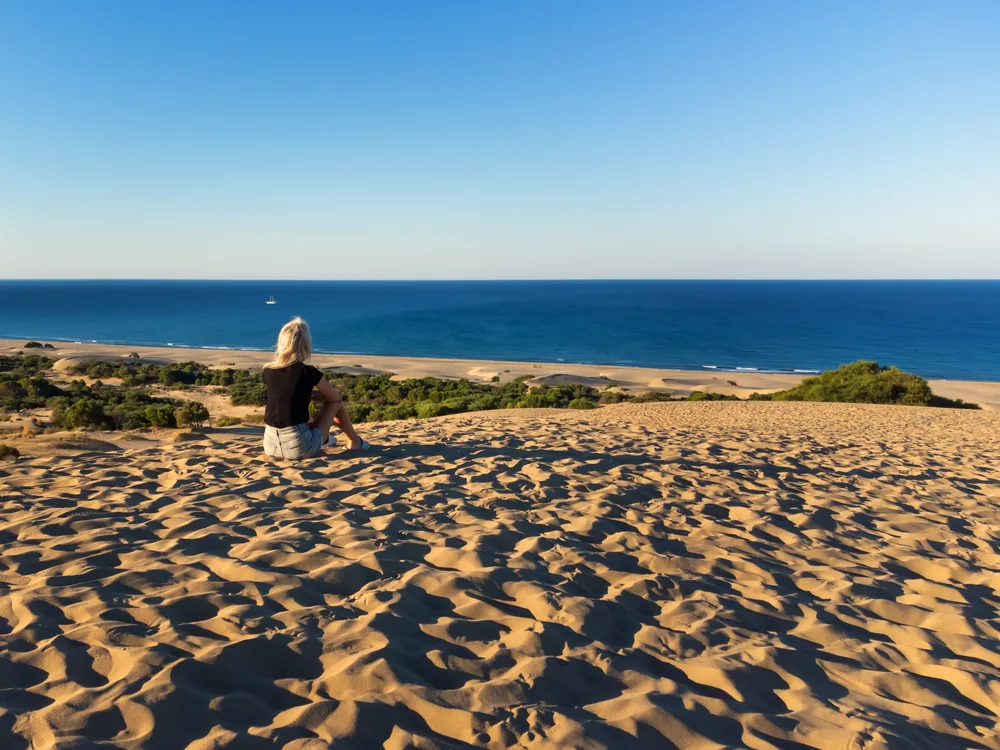
Length is the whole trick. The umbrellas gather near the entrance, and the further you walk the thinner the company gets. At the far end you will find a few families and perhaps a lone fisherman, and you can walk for an hour and still have the sand to yourself.
The day has a pattern. Mornings are calm, with firm, cool sand and flat water. In the afternoon the wind often rises and brings surf, which suits confident swimmers and children with boards. The beach faces west, so the last hour of light is the best one: the dunes throw long shadows and the water takes on a copper glow.
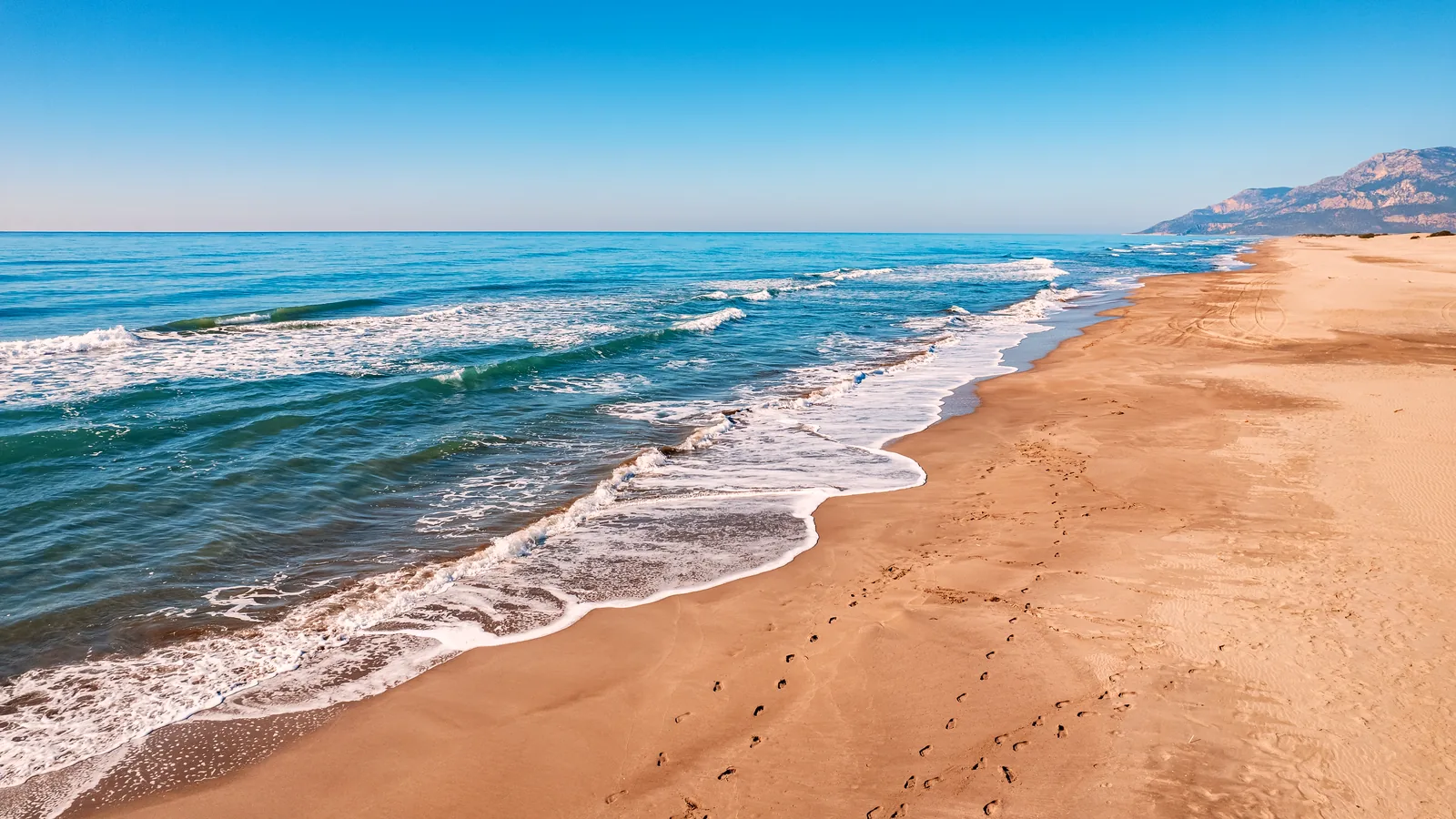
The water is clear, shallow near the shore and gently sloped, with a slightly cool edge. Cafés are limited and shade is scarce, so bring what you need.
Editor's picks
- Walk the ruins first.Go through the arch and past the council house in the cool of the morning, before the sand heats up.
- Swim in the morning.The sea is at its calmest, and the sand is easy on the feet.
- Walk to the far end.Past the umbrellas the beach changes character, with a few families, open sand and nothing else.
- Sort out shade early.Rent an umbrella at the main entrance, or carry on to the far end, where a few trees give a break.
- Take lunch in Gelemiş.Small family restaurants do gözleme, grilled fish and cold ayran, well away from beach prices.
- Come back for the light.Climb a dune near the end of the day for the view along the whole shoreline.
- Add Xanthos and Letoon.The two UNESCO-listed sites lie a short drive inland and make a natural second half to a day.
Insider notes
Entry is through the archaeological site and needs a ticket, which covers both the ruins and the beach. The Museum Pass (Müze Kart) is valid at the entrance. Carry some lira. From Gelemiş it is about a kilometre and a half to the ruins and roughly another kilometre to the sand. Bring water, snacks and a hat, and carry repellent if you linger at dusk, because mosquitoes gather near the marsh behind the beach.
The dolmuş minibuses between Kalkan and Gelemiş are easy, though the last stretch to the sand needs a short drive or a taxi. Check the last return before you settle in.
After dark the beach belongs to the turtles and is closed from about 8 pm until sunrise. Keep to the tracks through the dunes, leave no holes in the sand and take every scrap of rubbish with you. On windy afternoons the surf can be strong, so swim with care and never alone.
Send this to whoever you would go with. WhatsApp
How to get to Patara
Dalaman is the closest airport, about two hours by road, through Fethiye, which is about an hour from the beach. Kalkan is roughly 25 minutes away, with a dolmuş to Gelemiş. Flights from Europe and Istanbul are covered in Getting there.
By evening the wind softens, and the dunes hold the last of the light.