Active / Riding
Patara on Horseback, the Long Way Down to the Sand
Horse riding in Patara starts at a village stable, climbs to a ridge, drops through the ruins of a Lycian capital and ends in the dunes. It is the same ground most visitors cover on foot, seen from a higher seat.
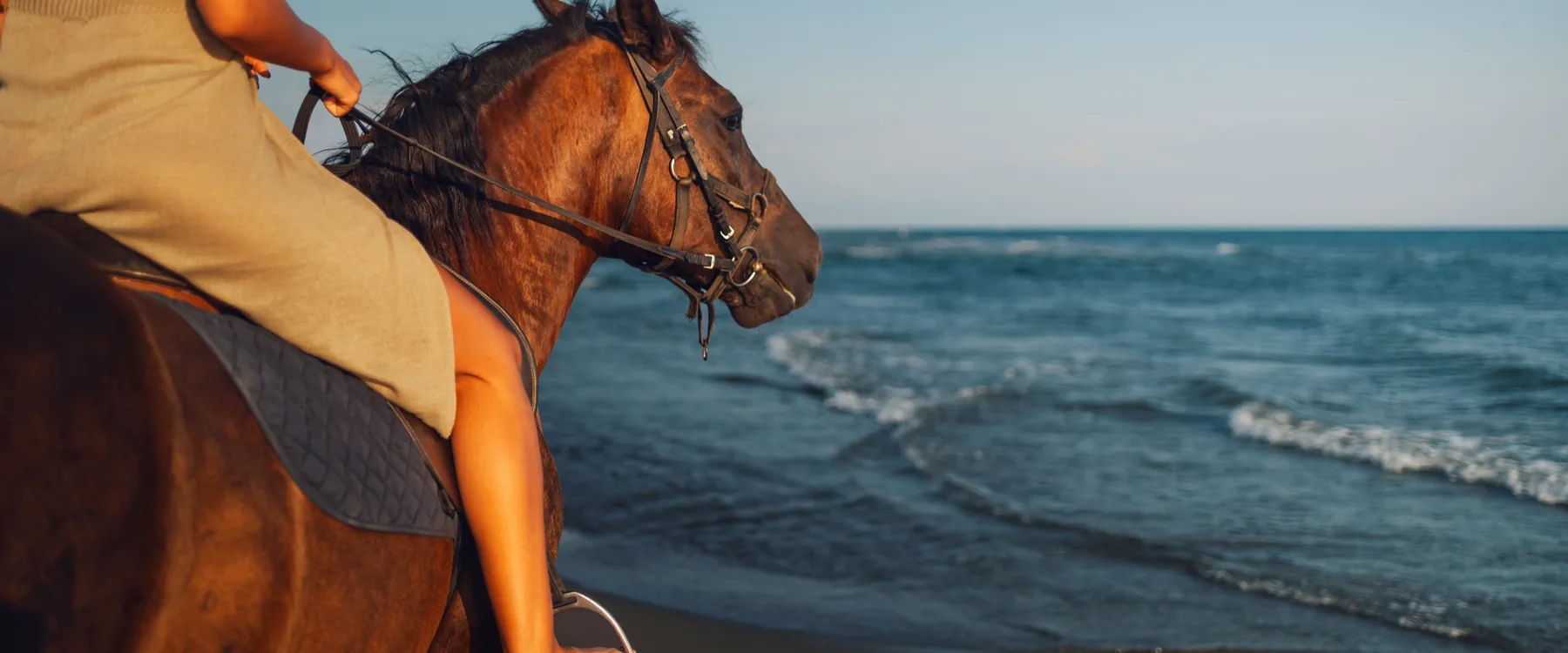
The horses are saddled before you arrive, standing in the shade of a wall with their heads low. Someone hands you a hard hat, someone else holds a stirrup, and the guide introduces you to your horse by name. Then the group files out past the last house of the village, between olive trees, and the track begins to climb.
Ask the stable about the pace and the level it expects before you book, since groups are often mixed.
A ridge that looks down on a capital
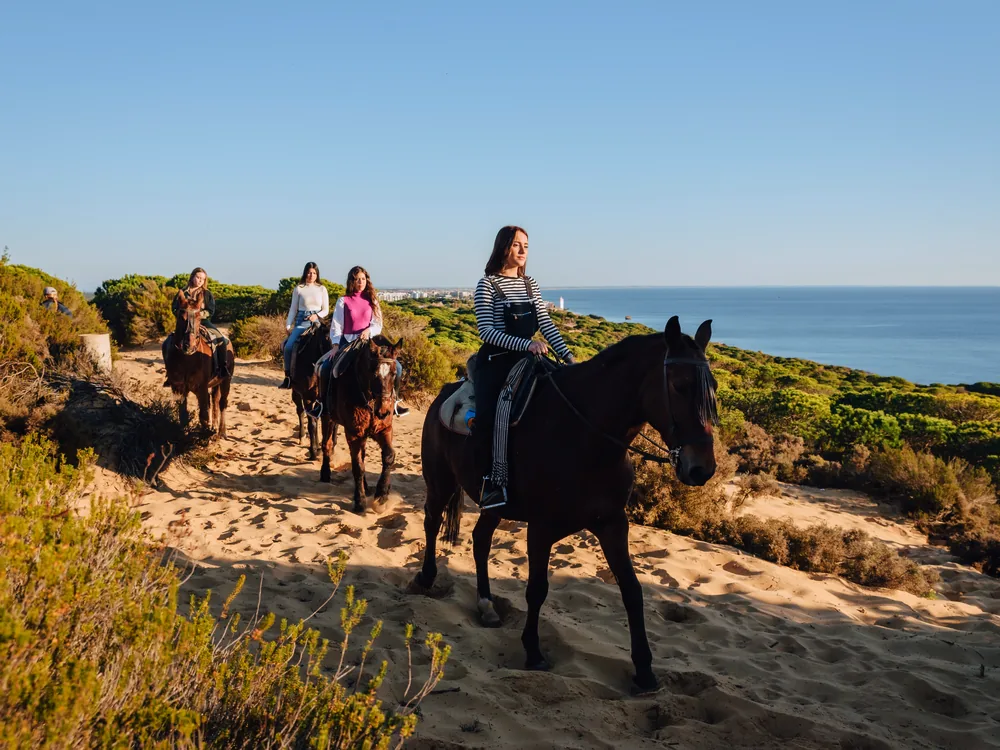
The track levels out a couple of hundred metres above the sea. Below, Patara is laid out like a map: the reed ground where the harbour silted up, the pale line of the beach beyond it. On a clear day the Greek island of Meis sits on the horizon. The guide stops the group and nobody gets down. The horses doze, you look, and that is the whole stop.
Past the baths and down the old street
From the ridge the track drops through forest and reaches the ancient city without any ceremony. You pass the old baths and the edge of the main street, on ground that was once the capital of the Lycian League. On foot the site is signboards and shade. From the saddle it is a corridor of stone below your stirrups, and the horse treats it as the road it once was.
Where the horses wait
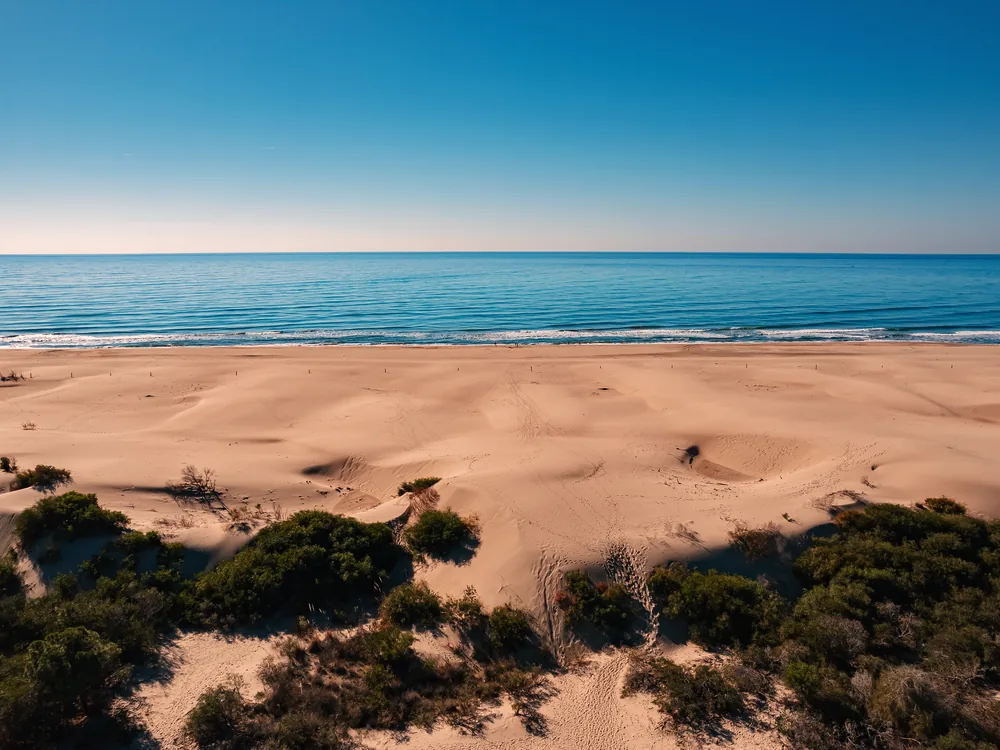
Beyond the ruins the trees thin to scrub, and the scrub gives way to sand. The ride crosses the dunes and stops near the stretch of beach where loggerhead turtles nest. Riders get down and the horses rest. You walk the last part on the fine sand, on your own feet. A nesting beach and a string of horses do not mix, so the ride ends where the walking begins.
Back at the stable the horses are unsaddled and led to water, and the guide asks how it went. It is easy to arrive expecting the beach to be the highlight and leave still thinking about the ridge, with the whole plain of Patara spread under the horse's ears.
Watch the clock. Rides last between two and three hours depending on the stable, and the middle of the day is hard on riders and horses alike, so most go out in the morning or towards evening.
Editor's picks
- Take the first ride of the day.The ridge is exposed, the air is cool and the light lies flat across the plain.
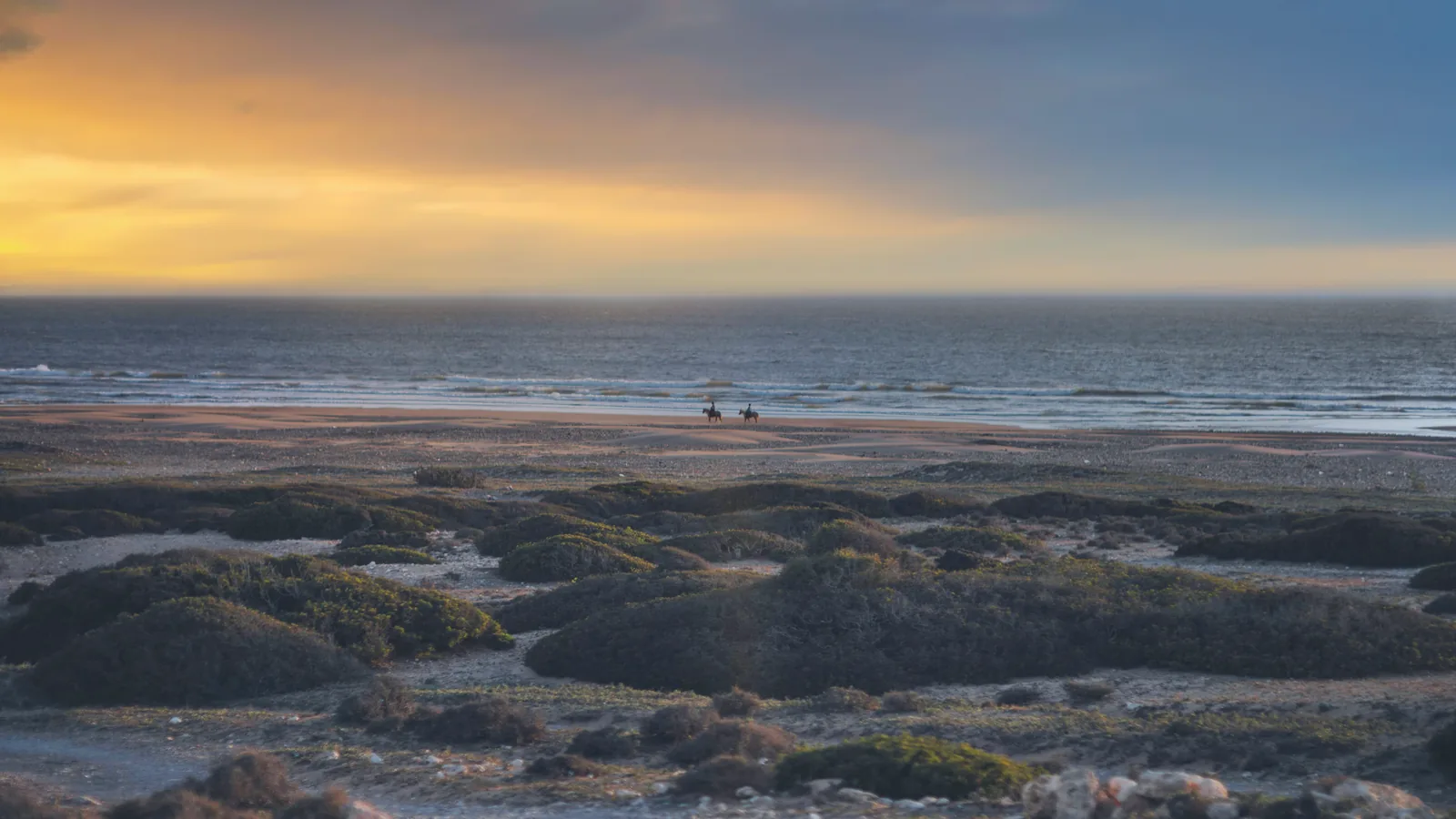
- Or take the last.Some evenings the ride is timed to end on the sand at sunset. Ask when you book.
- Wear long trousers and closed shoes.Stirrups are hard on bare ankles.
- Keep the camera for the ridge.It is the one halt where the horses stand still and the view is wide open.
- Say how much you have ridden, and be honest.The guides match you to a horse once they know.
- Walk the ruins on another day.The ride gives you the layout. A slow lap on foot gives you the theatre and the granary.
- Finish with a late lunch in Gelemiş.The village has small family restaurants, and a ride that ends in the afternoon suits a long table.
Insider notes
The stables are in Patara itself, and they have long collected guests from Kalkan and Kaş, so ask about pick-up when you book. Ask, too, whether the price includes entry to the archaeological site. If it does not, the Museum Pass (Müze Kart) is valid at the gate, and it helps to carry some lira.
The guides set the line through the ruins and across the dunes. Stay in it, leave the sand as you found it and take any rubbish back with you. The beach is a turtle nursery first and a riding route second.
Send this to whoever you would go with. WhatsApp
How to get to Patara
Dalaman is the closest airport, about 1 hour 45 minutes by road. The route runs past Fethiye and turns off the D400 for Gelemiş, a few kilometres inland, and your stable can tell you about pick-up from the village or from Kalkan. Flights from Europe and Istanbul are covered in Getting there.
The ride starts on a ridge above the ruins and comes down to the dunes.