Culture / Ancient Cities
Myra, the Lycian Cliff City Under Modern Demre
Myra lies beneath the farm town of Demre: a Roman theatre at the foot of a cliff, tombs cut into the rock above it, and a harbour a few kilometres to the south. A fourth-century bishop named Nicholas made the name famous. The city is older than him by centuries.

Demre is a farm town first. Shops on the main street sell agricultural equipment, tomatoes and oranges come off the plain, and the coaches from Antalya pull up as if they had taken a wrong turn. Two kilometres inland the town's real age shows. Behind a Roman theatre a limestone cliff rises, and its face is cut with doors.
Doors cut in the cliff
Coins and inscriptions put a city here by the fifth century BC. Myra became one of the six principal cities of the Lycian League and, under Theodosius II, the capital of the province of Lycia. The rock tombs were carved between the fifth and third centuries BC, on both sides of the theatre. They copy the lines of timber houses that no longer exist, with doors, lintels and window frames worked in stone. Some carry reliefs of the dead and their families, still readable where the rock has stayed dry.
Stone masks and vaulted galleries
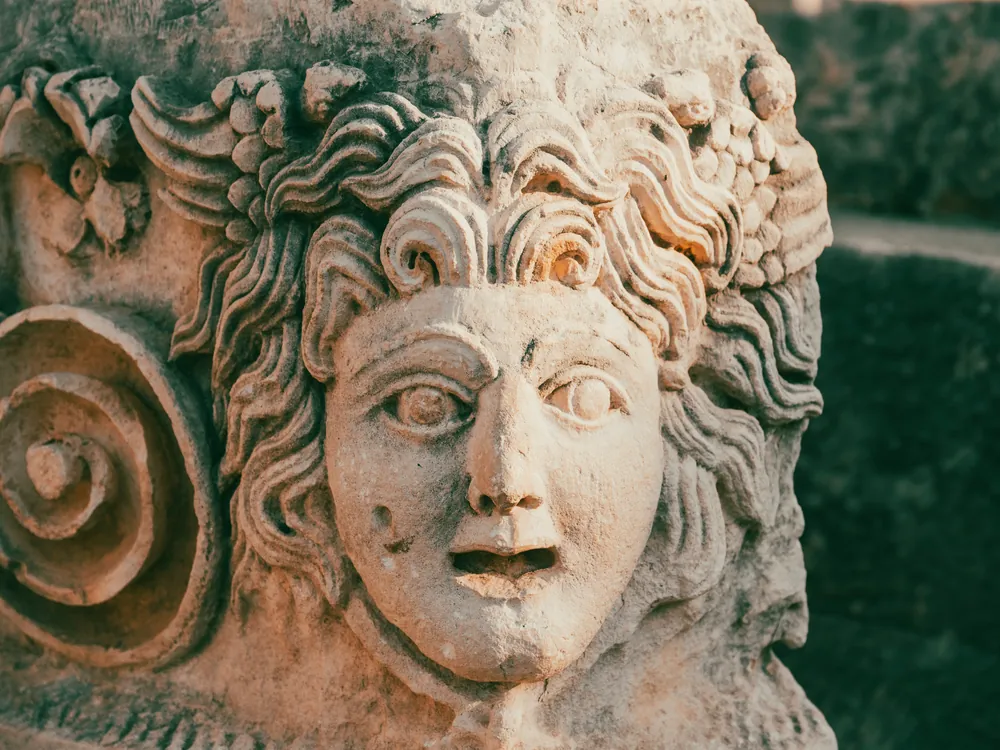
The theatre is Roman, with vaulted galleries running behind the seating and carved masks on its walls. According to the excavation director Nevzat Çevik, it is the largest Roman theatre still standing in Lycia. Climb to the top rows. From there the tombs sit in the cliff on either side of you, and the plain of greenhouses and orange trees lies flat below.
Upstream to the Lion's Tomb
A second group of tombs, the river necropolis, lies about 1.5 km upstream. Its best-known monument is the Lion's Tomb, also called the Painted Tomb. The path from the theatre is short, and the tombs here are cut lower and closer to the water than the cliff group, which gives you a second look at how the Lycians placed their dead.
Pilgrims at Andriake
Andriake was Myra's harbour, 5 km south-west of Demre. Pilgrims travelling from Jerusalem landed here on their way to the saint's church. Hadrian's granary on the quay now houses the Lycian Civilizations Museum, and the old harbour channel can still be traced beside it.
Back in town, the bishop
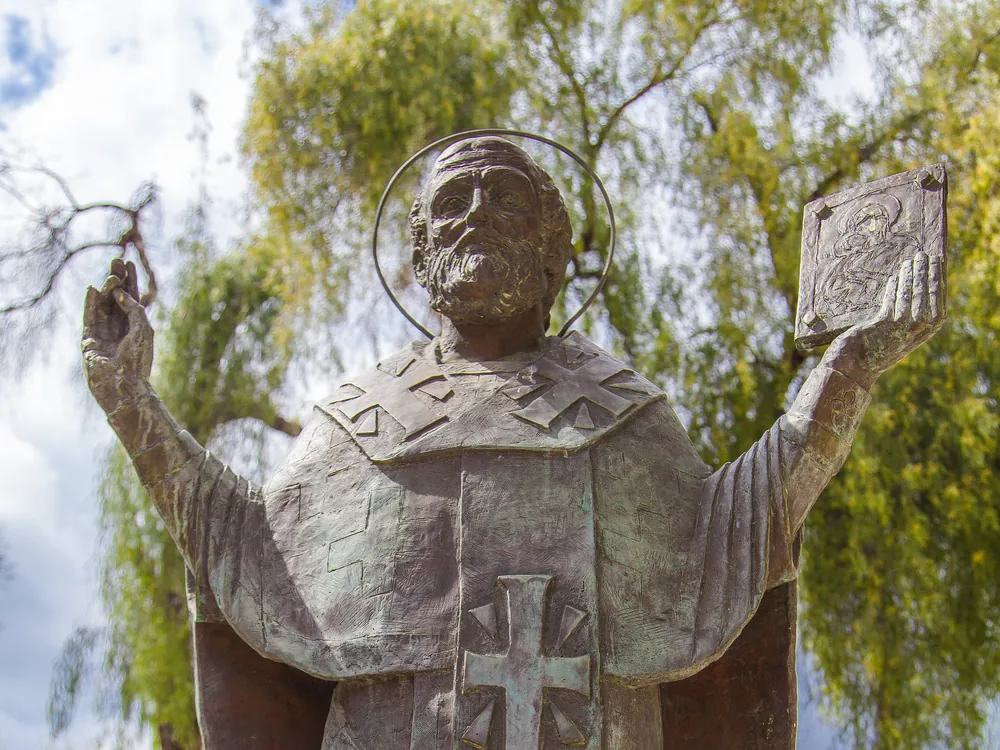
Nicholas was bishop of Myra in the fourth century, and local tradition has him born in Patara, down the same coast. Little survives of him but stories. He gave to the poor in secret, and sailors made him their patron. The Dutch Sinterklaas and the Belgian Saint Nicolas stayed close to the bishop, and Santa Claus is the same man after a long journey west and a change of coat.
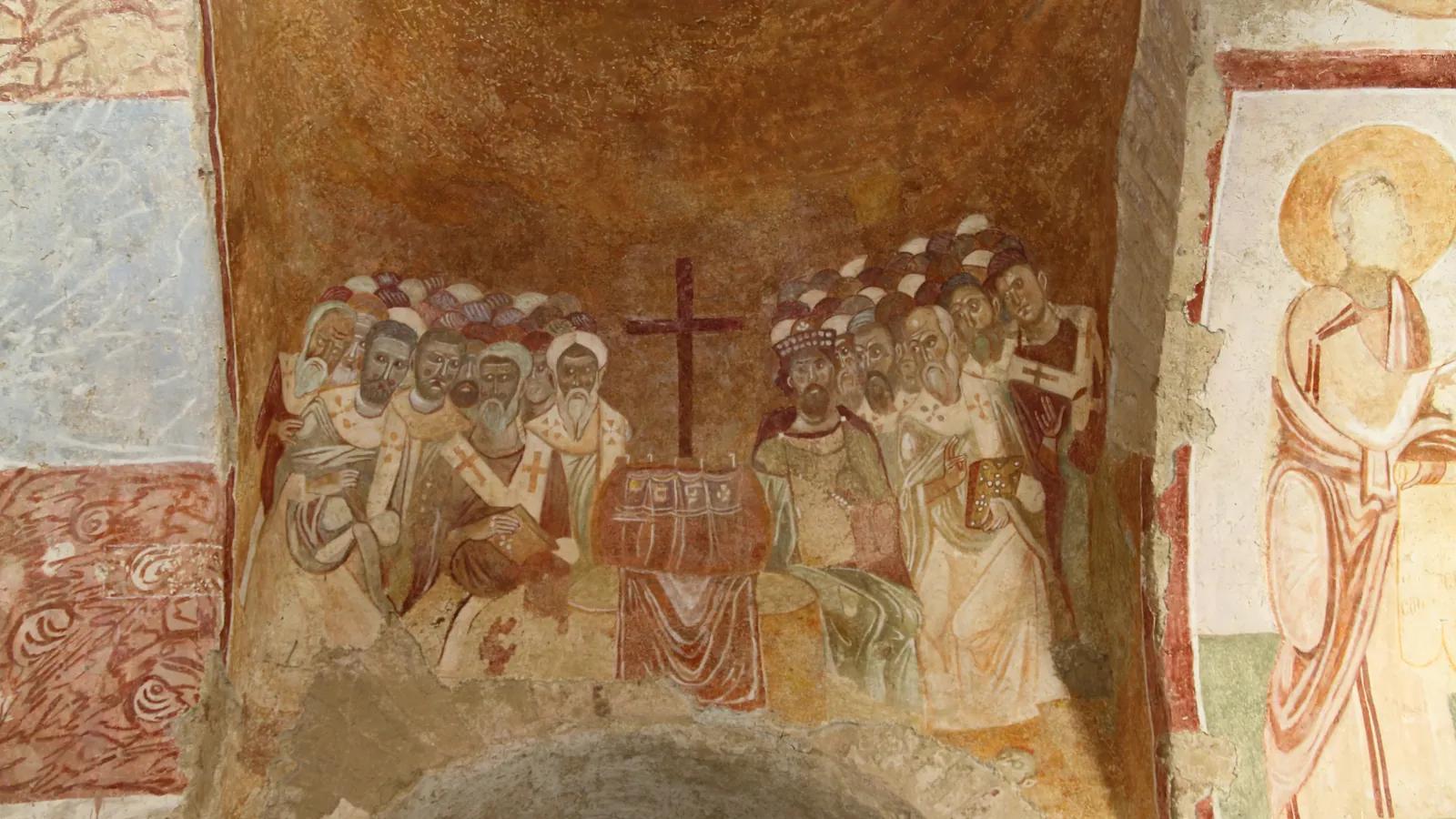
His church stands in the middle of Demre, on the site of a sixth-century basilica, largely rebuilt in the 1040s. Inside is a Roman sarcophagus, shown for centuries as his tomb. It is empty. Sailors from Bari carried off most of the bones in 1087, and Venetian sailors took the rest. In December 2024 the excavation director, Ebru Fındık, announced a second sarcophagus in an annex south of the courtyard, which her team thinks may mark his first burial place.
Editor's picks
- Sit in the top rows of the theatre.From there you can see how the tombs sit in the cliff on either side.
- Walk upstream to the Lion's Tomb.The river necropolis is about 1.5 km from the theatre.
- Look for the reliefs.Some tomb fronts show the dead with their families, carved in the stone.
- Go down to Andriake.Hadrian's granary there is now the Lycian Civilizations Museum.
- Add Kekova.Boats to the sunken city leave from Üçağız, a short drive away.
Insider notes
The Museum Pass (Müze Kart) is accepted at Myra, at the church in town and at the Lycian Civilizations Museum in Andriake. Show it at each ticket desk.
The only bones Demre could ever show are a few fragments thought to be his, and they are not in the church. They are at Antalya Museum, about 145 km east.
Myra is 2 km from the church, so take the car or a taxi. There is a car park a few minutes' walk from the ticket office.
Send this to whoever you would go with. WhatsApp
How to get to Demre
Antalya is the closest airport, about 2 hours 30 minutes by road. Buses from Demre's station run to Kaş and Antalya, and Myra is a short drive from the church. Flights from Europe and Istanbul are covered in Getting there.
Above the theatre the doors in the cliff face south, each with its stone lintel and no house behind it.