Culture / Ancient Cities
Arykanda, the Terraced City Below the Falcon Rock
A Lycian city stacked on five terraces under a limestone cliff, with a two-storey bath, a theatre cut into the slope and a stadium of half the usual length.

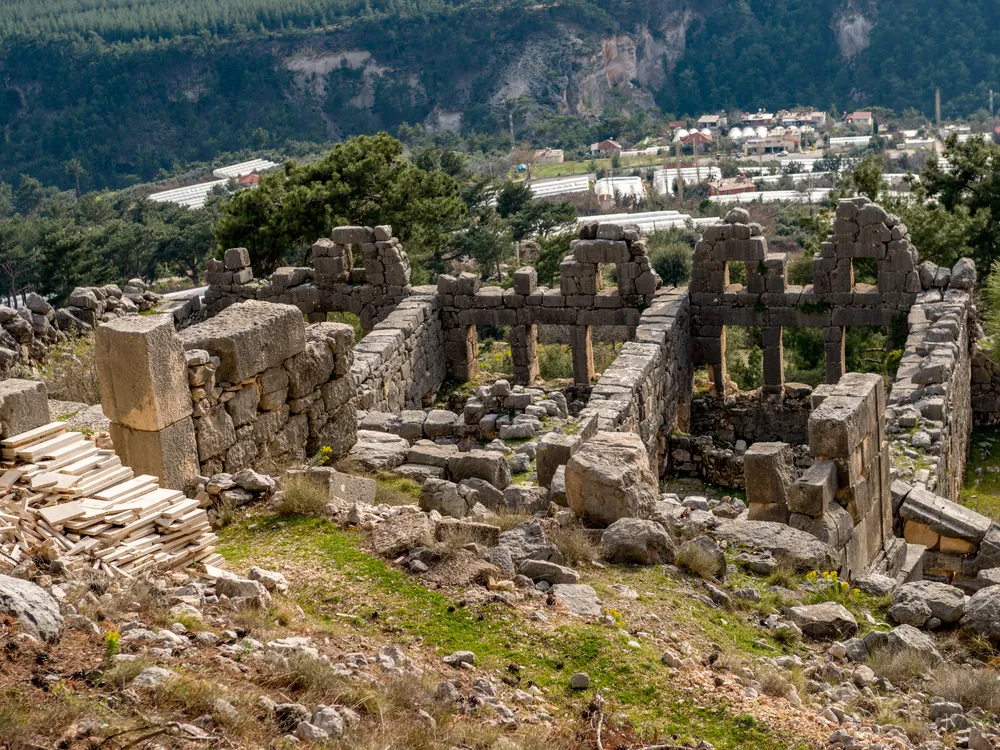
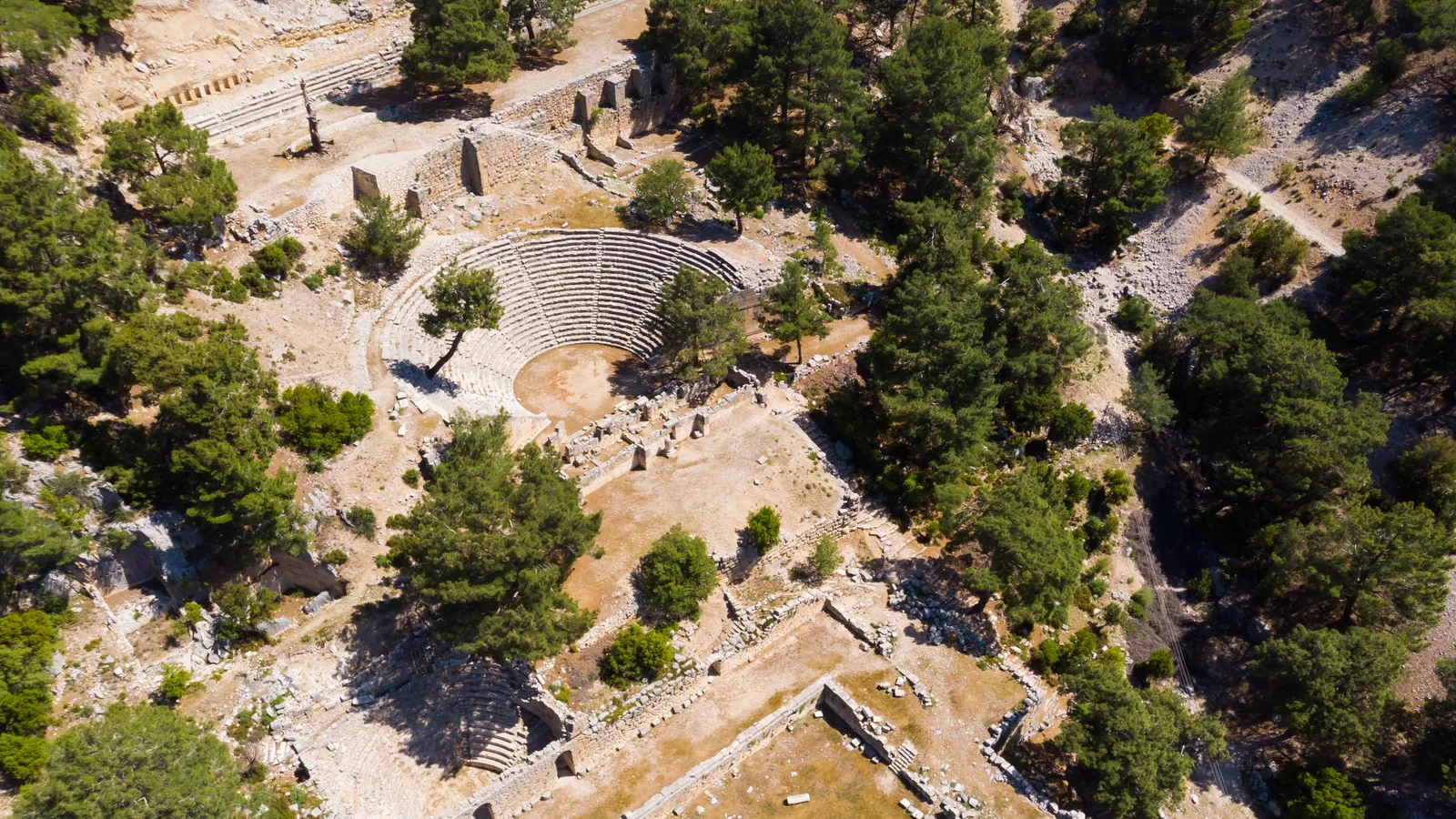
The path starts under arches. A Roman bath stands at the foot of the slope, two storeys and about ten metres of stone, and behind it the hill rises in steps: agora, odeon, theatre and, at the top, a stadium, each on a terrace cut level into the mountain. Two hundred metres of height separate the lowest wall from the highest.
Arykanda built no city wall. Cliffs close it on three sides, with the Şahinkaya, the Falcon Rock, at its back. The name is Luwian and older than any stone on the site, though little here predates the fifth century BC.
The timber road to Phoinikos
The city stood on the route between the harbour of Phoinikos, modern Finike, and the inland plains, and the Ministry of Culture credits the timber trade for much of its wealth. Persian rule gave way to Alexander in 333 BC, then to the Ptolemies, the Seleucids and Rhodes. The wide agora, with a temple of Tyche at its centre, dates from Alexander's time.
The city that lived on credit
The account usually repeated says Arykanda's citizens spent beyond their means, and in 197 BC backed the Seleucid king Antiochus III largely to keep their creditors at bay. The city joined the Lycian League, where towns voted by size, but never held the three votes of the biggest. Rome took direct control under Claudius in AD 43, and the building that followed shows little sign of an economy in trouble.
Ten metres of bath
The great bath came after the earthquake of 141. It stands largely intact on the lowest terrace, carried on arches, with a gymnasium beside it. The odeon above also served as a council chamber, and a statue of Hadrian was found inside. It now stands in Antalya Museum.
A stadium cut to half size
The theatre was cut into the slope in the second or first century BC and altered under Rome. It looks south over the valley. One terrace higher, the stadium runs a little over a hundred metres, about half the length of a regular track, with seats on one side only, dug out of the mountain. Behind them stands a wall of niches from a small sanctuary.
A street of tombs
Above the eastern baths a street runs between mostly Roman tombs, from barrel-vaulted chambers to temple tombs on podiums. One has a Corinthian front with a lion in relief. Charles Fellows identified the ruins in 1838 from tomb inscriptions and coins lying on the surface.
A petition to the emperor, 312
An inscription preserves an anti-Christian petition that Arykanda's citizens sent to the emperor Maximinus Daia in 312. By the fifth century the temple built for the cult of Trajan had been reused as a basilica and a bishop's palace. In the sixth century the inhabitants moved down to Arif, the village below, and a deacon named Peter, recorded for Arykanda, attended the Second Council of Nicaea in 787.
Editor's picks
- Stand under the bath arches first.It is the tallest thing on the site, and the stairs above make more sense once you have seen how far up you are going.
- Cross the agora to the odeon.The statue of Hadrian turned up here, and the terrace walls show how the city was cut into the slope.
- Sit in the theatre's upper rows.The seats face south, and the terraces below read like a plan.
- Climb to the stadium and look behind the seats.The niched wall belonged to a small sanctuary.
- Follow the street of tombs.Find the lion relief on the Corinthian front.
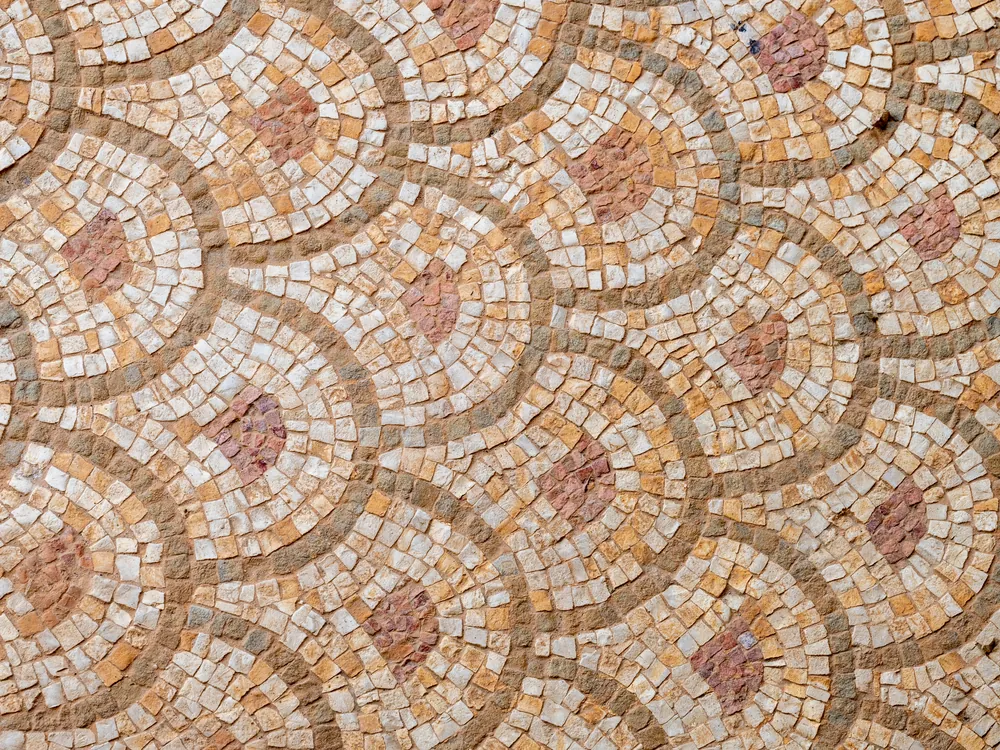
- Look for paint and mosaic in the basilica.Traces of both survive in the reused temple.
Insider notes
Entry is free, so there is no ticket to buy. Excavation began in 1971 and continues, so expect a roped trench or a covered area somewhere on the terraces. The paths between levels are steep and uneven, and shoes with grip help.
The theatre still works as a stage. Classical concerts have been held here, and for one piano recital the instrument came up the hill by tractor.
Send this to whoever you would go with. WhatsApp
How to get to Arykanda
Antalya is the closest airport, about 2 hours 30 minutes by road. The site stands about 30 km up the Finike to Elmalı road, and a car is the practical way to reach it. Flights from Europe and Istanbul are covered in Getting there.
Behind the stadium seats, a wall of niches still faces the valley.