Culture / Historic Sites
Kayaköy, the Hillside Village That Nobody Moved Into
Above Fethiye, several hundred stone houses stand open to the sky on a slope that emptied in 1923 and never refilled. Walk up slowly and the silence does most of the telling.
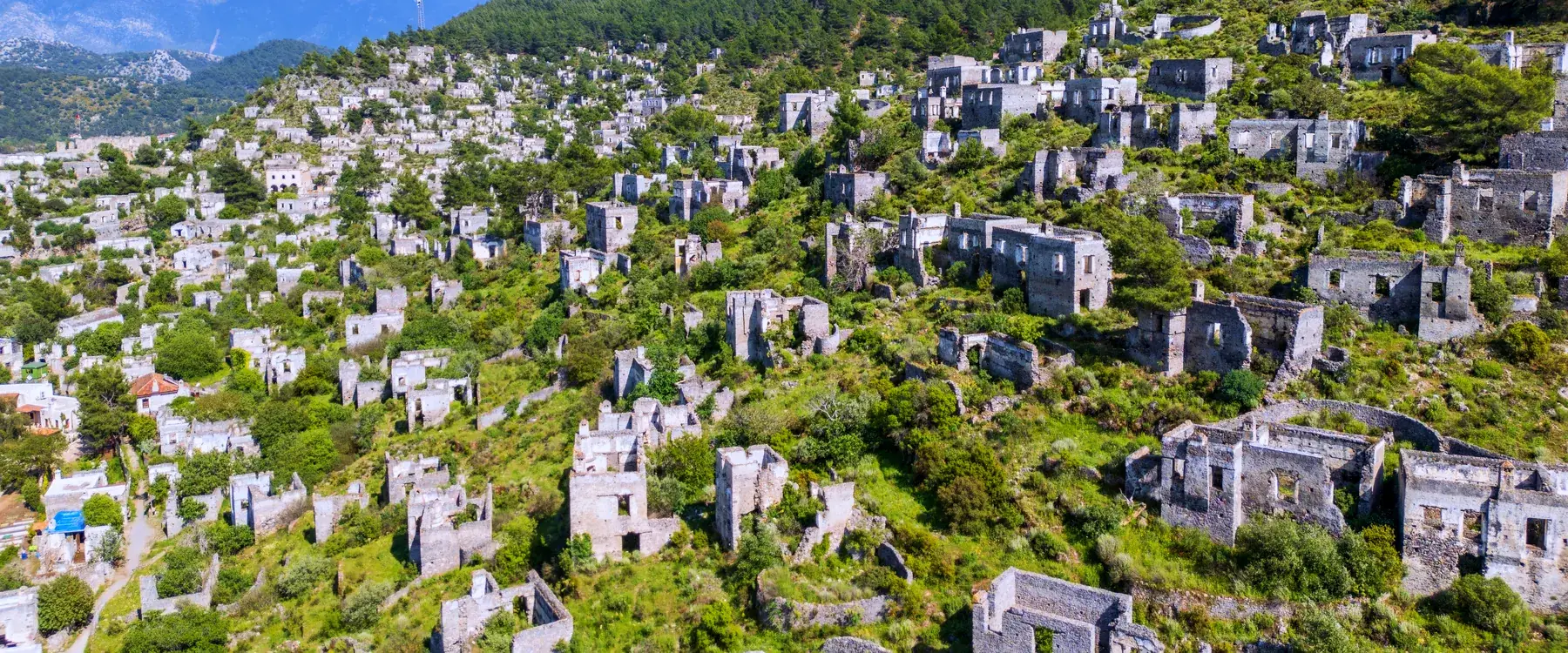
The first surprise is how much is still standing. Walls, stairways, hearths and the marble frames of doors and windows have outlasted the timber that once closed them in, so the village climbs the slope as a field of stone shells, doorway above doorway, with nothing left to keep the rain out.
Its Greek builders called Kayaköy Levissi. It is not an ancient ruin. Most of what you pass went up in the nineteenth century and the first years of the twentieth, which makes the emptiness recent enough that descendants of its families still return each year for a ceremony of remembrance.
Houses that left each other their light
By the Ministry of Culture and Tourism's count there are 350 to 400 houses, each no larger than about 50 square metres, usually two storeys with a cellar below and a cistern at the door to catch roof water. They were set on the slope so that none blocked the sun or the view of its neighbour. Greek families lived up here and worked in craft and trade, while Muslim neighbours farmed the valley floor. Enough people lived on the hill to support a newspaper, several schools and shops. Lycian-style tombs survive in and around the village, and the older name, Karmylassos, belongs to the ancient settlement it grew over.
Nobody took the hill
In January 1923, before the Treaty of Lausanne was finished, Greece and Turkey signed a convention for a compulsory exchange of populations, Greek Orthodox Christians from Turkey for Muslims from Greece. Kayaköy had already thinned out during the war years. The families who remained left for Greece, many of them settling near Athens in a place they called Nea Levissi, New Levissi.
Muslim families sent the other way were offered the empty houses. According to most accounts they found the stony slope poor farmland next to what they had left, and few stayed. Nobody replaced them. The 1957 Fethiye earthquake then damaged much of what the weather had left.
Pink plaster and red dots
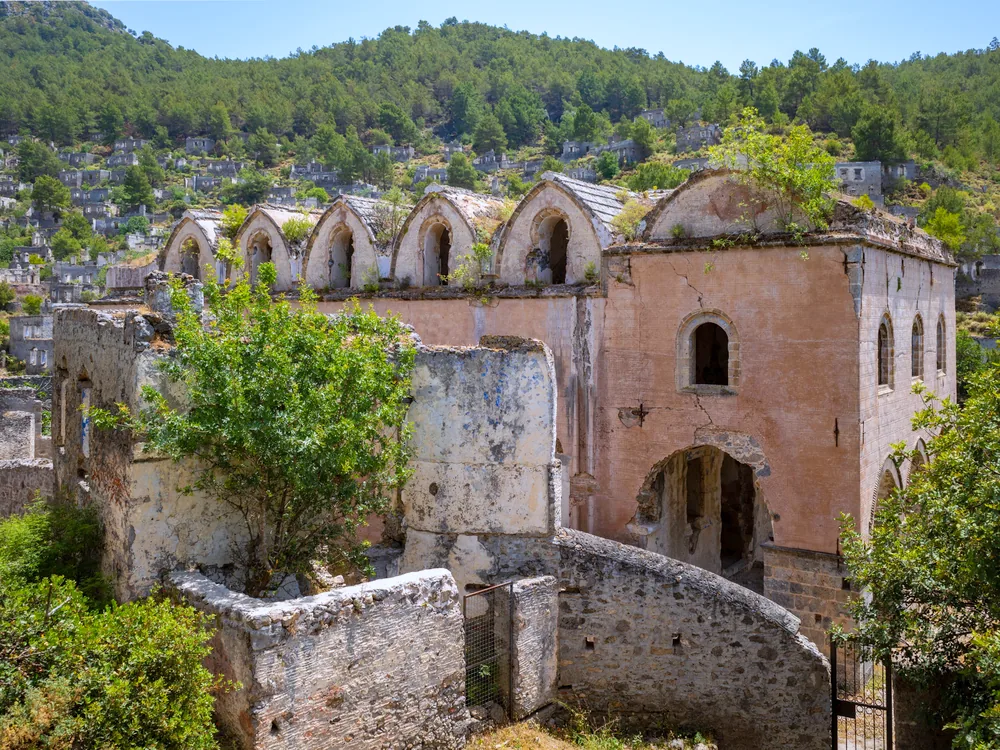
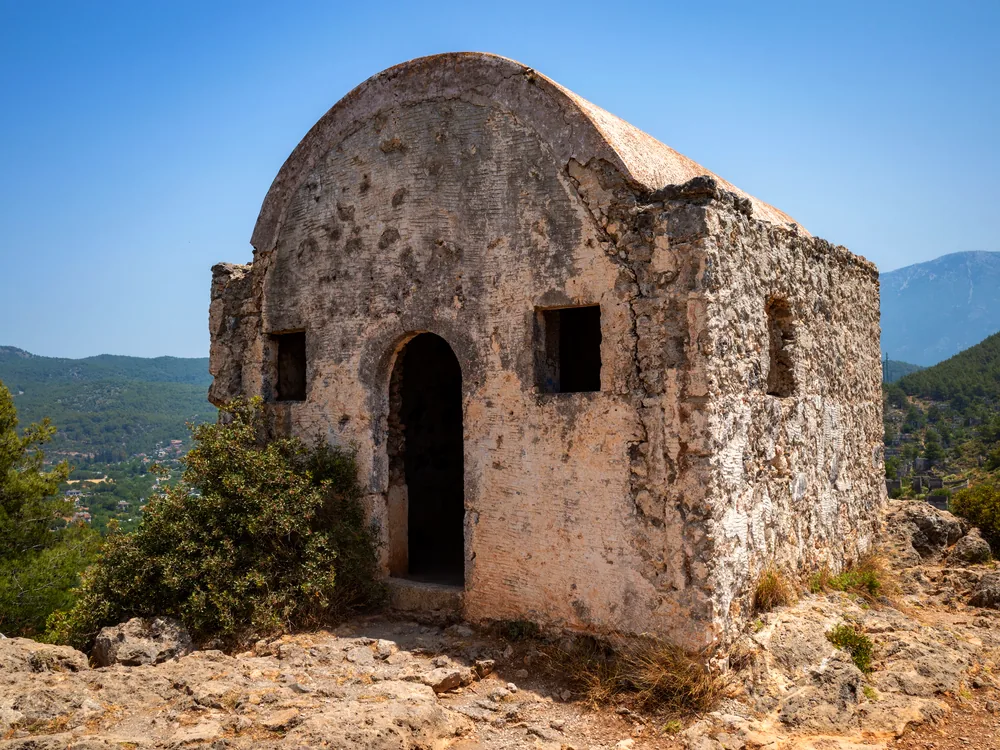
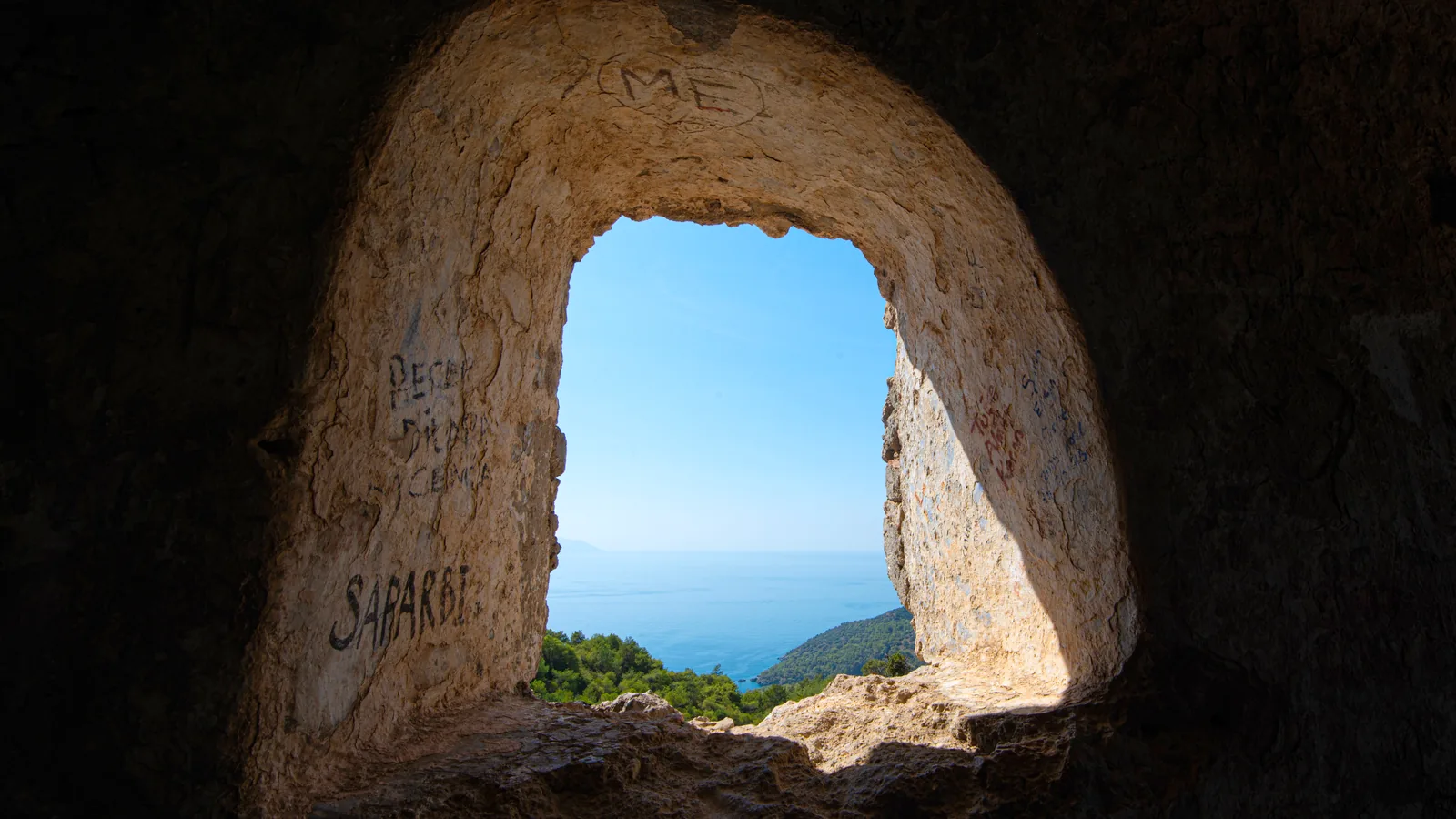
Two churches mark the village. The Lower Church, Panayia Pyrgiotissa, stands at the western edge and survives in better condition, its walled courtyard floored with pebble mosaic. The Upper Church, Taxiarchis, sits on the hill near the middle under a thick coat of pink plaster, and the whole slope falls away from its ridge. A trail marked with red dots climbs from the Lower Church to a small chapel on the summit, about twenty minutes uphill. From there the view turns to the far side of the hill, to the valley and the sea.
The lanes are worn stone and steep, some buildings are closed for safety or restoration, and the village repays two hours far better than twenty minutes.
Editor's picks
- Buy the ticket at the Lower Church and climb from there.The lanes rise past the houses and the pink Upper Church comes into view above you.
- Read the houses, not only the churches.Find a cellar, a hearth and the cistern at a doorway, and the plan of a household comes together.
- Walk up to the hilltop chapel.Follow the red dots, and keep it for last. The sea is on the far side.
- Leave on foot toward Ölüdeniz.The Lycian Way runs through the ruins, and the walk over the hill takes about two hours. Arrange a lift or a dolmuş back.
- Read Birds Without Wings.Louis de Bernières' novel is presumed to have drawn on Kayaköy for its fictional village of Eskibahçe.
- Finish at Ölüdeniz.The lagoon is a short drive away and suits the afternoon better than the ruins do.
Insider notes
The ticket booth stands beside the Lower Church, and anyone going up through the village passes it. Turkey's Museum Pass is accepted, so it is worth carrying if you hold one.
Climb to the Upper Church before you wander the lanes. From its ridge the whole village sits in one frame, and the plan of the place makes sense before you are lost in it.
Dolmuşes marked Kayaköy run from Fethiye, and the driver will know where to put you down.
Send this to whoever you would go with. WhatsApp
How to get to Kayaköy
Dalaman is the closest airport, about 1 hour 10 minutes by road. Fethiye is the last town before the village, and the winding road up from it takes about 15 minutes by car, with dolmuşes running to Fethiye and Ölüdeniz. Flights from Europe and Istanbul are covered in Getting there.
Kayaköy kept its streets and lost the people who walked them.