Culture / Ancient Cities
Kaunos, the Harbour City the River Took Back
A Carian port left stranded in the reed beds of the Dalyan delta, with a theatre, a domed church and a cliff of tombs across the water. Cross early and the hill is yours.
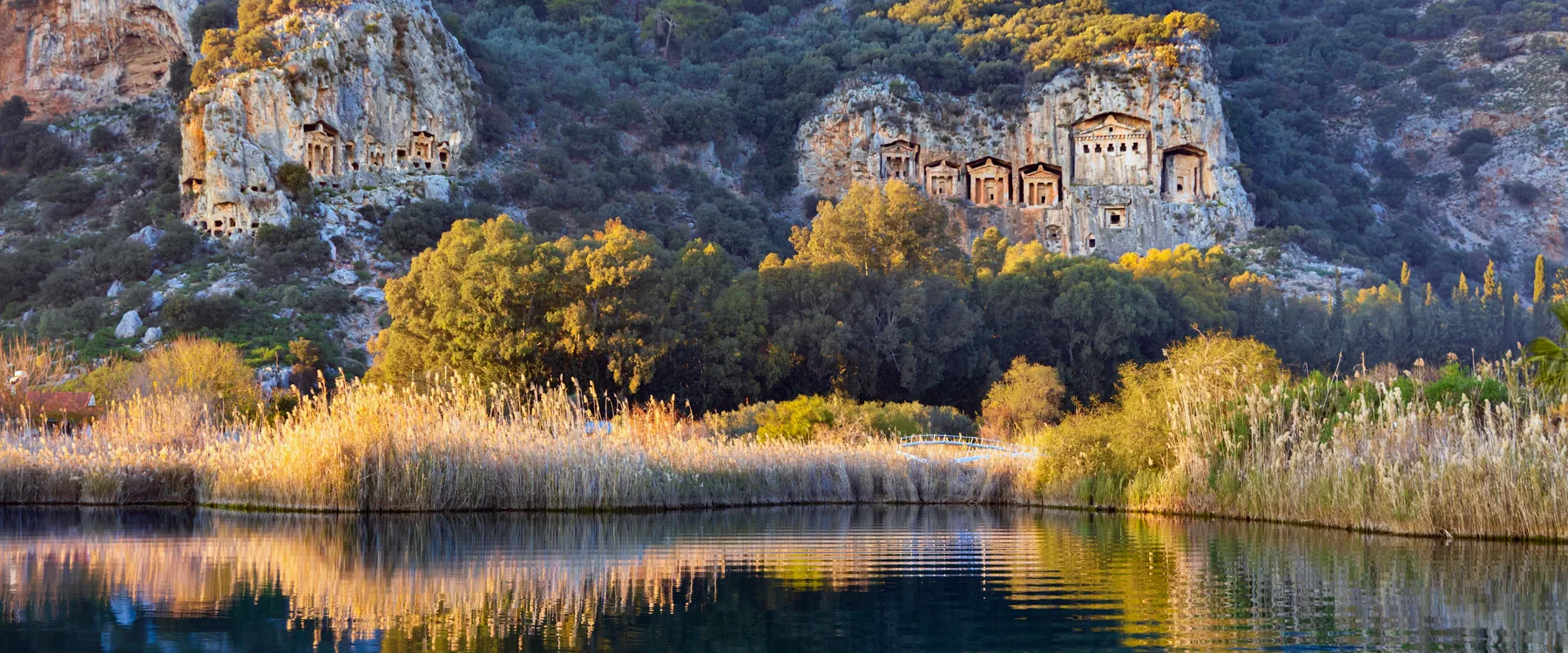
From the Dalyan waterfront the tombs arrive first. Temple fronts with columns and pediments are cut straight into the cliff across the river, the limestone gone the colour of burnt orange, and the reeds below hide the water's edge. They look like Greek temples that someone forgot to build outwards.
They are the front door. Behind them, on a hill reached by a small boat and a stony walk, is Kaunos, a city that lived off the sea and now sits several kilometres from it. In the first hour after the gate opens, you may have most of it to yourself.
Where the sea used to be
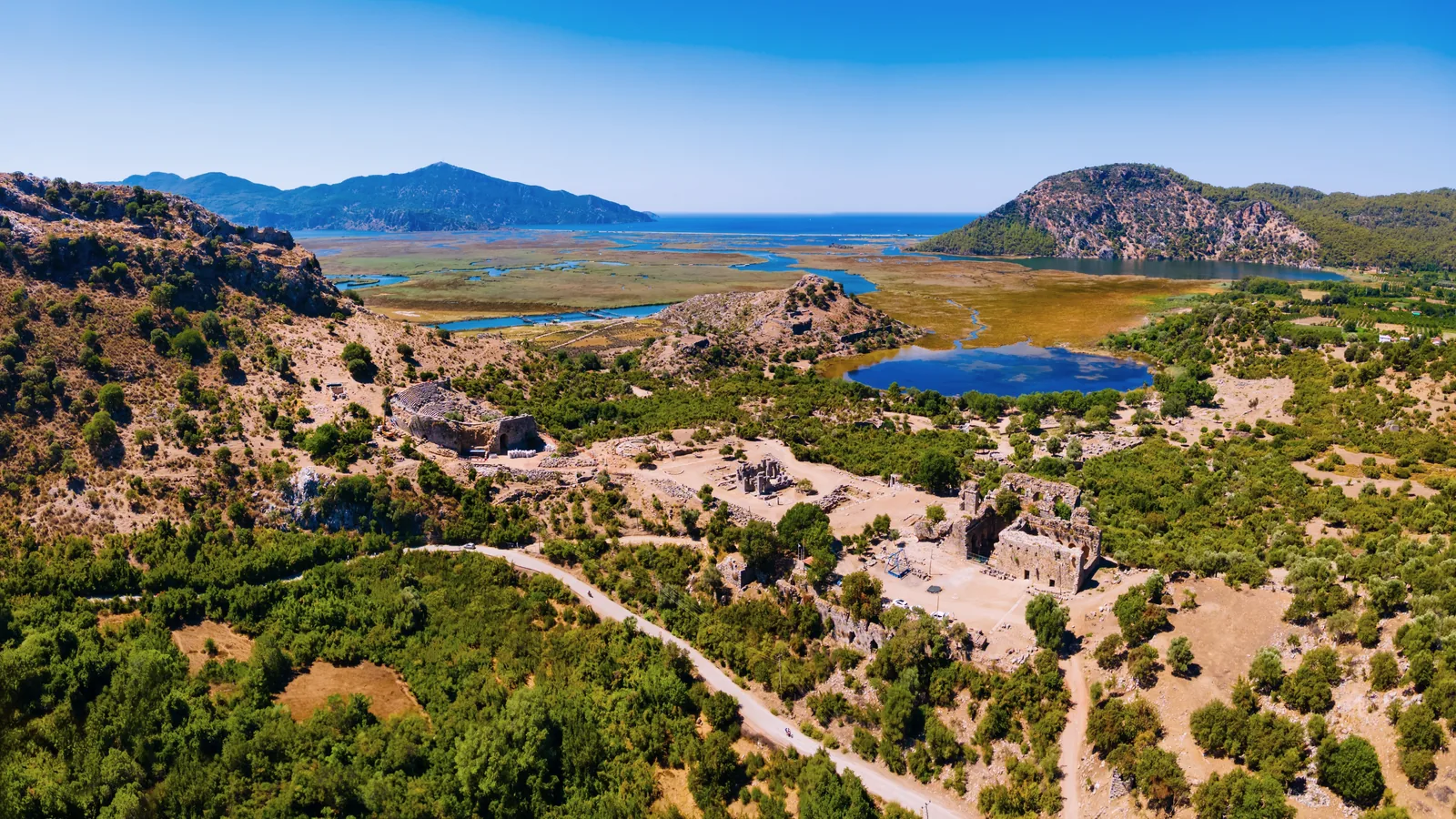
Kaunos stood on the border between Caria and Lycia, and the harbour was its living: salt, trade and the dues paid on both. The quays sat at the foot of the hill, open to the Mediterranean. Then the river did what rivers do. Silt from the delta closed the harbour mouth and pushed the coast outwards, and the city lost the thing it existed for. Malaria is the usual explanation for the final emptying. The silt had already done the harder work.
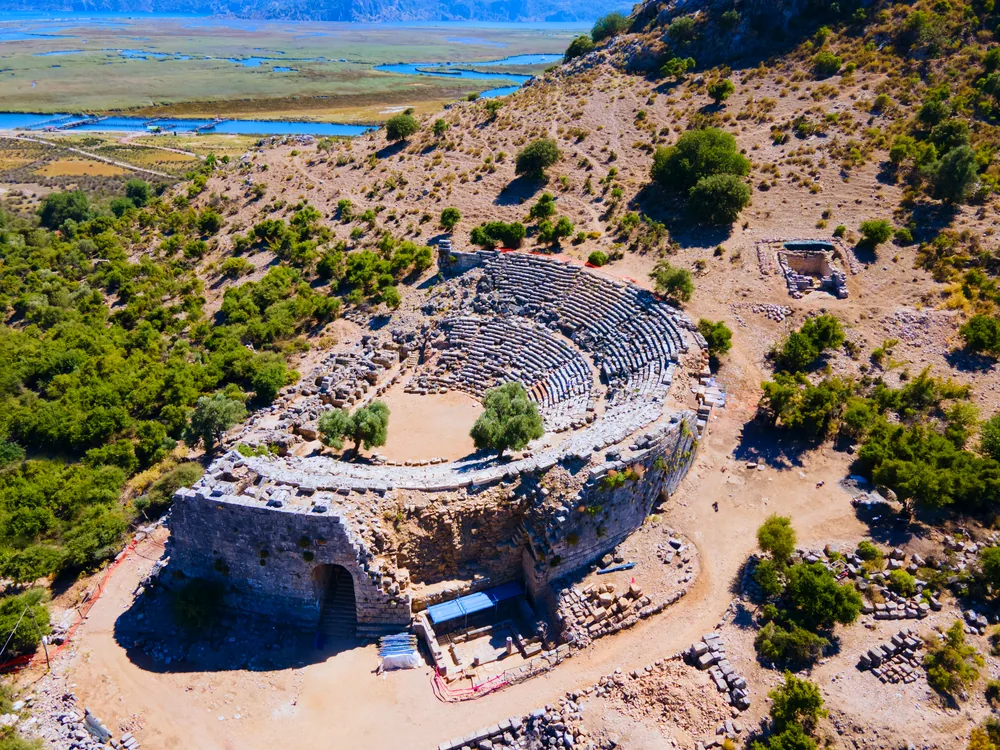
What remains is spread across terraces. There is a theatre with both Hellenistic and Roman work in its stones, the foundations of Roman baths, a Byzantine basilica, and acropolis walls climbing above them all. Down by the old harbour, a fountain in the agora carries a long inscription of customs law, proof that the city taxed whatever came ashore. Today the quay faces grass.
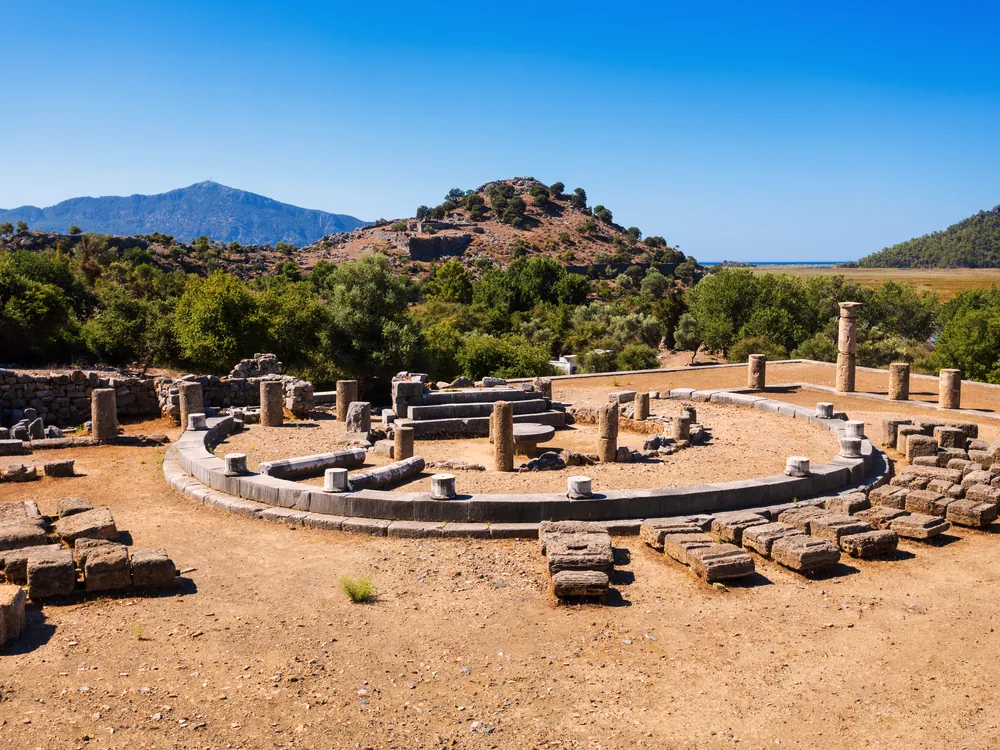
Carian city, Lycian tombs
The tombs are the reason many visitors come, and they carry the most interesting detail on the coast. They were cut in the fourth century BC as temple fronts, with Ionic columns and carved pediments, a form found across Lycia and adopted here by a city that was not Lycian. Well over a hundred rock tombs are grouped on the cliff, and it is the clearest place to see two cultures borrowing from each other.
Entering them is not allowed, for the visitor's safety and the stone's. That suits the view. They are best seen from the water.
A hill without shade
Kaunos works on timing. Shortly after opening, the only sounds are cicadas and boat engines, the stone is cool and the light on the tombs is low and warm. By mid-morning the tour boats arrive and the theatre fills.
Mind the ground. Shade on the acropolis is thin, the paths are stony, and a few staircases are not to be trusted. Shoes with grip and a hat matter more than a guidebook.
Editor's picks
- Cross as early as the boats and the gate allow.Small boats leave from the Dalyan waterfront, and the tombs look best from the water in early light.
- Climb to the theatre first.The view over the delta and the reed beds explains the whole story of the harbour in one look.
- Walk down to the old harbour and the agora.Find the customs inscription on the fountain, then stand where the quay was and look for the sea.
- Climb the acropolis only if you are steady on loose rock.The path is hard to follow in places, and the view over the lagoon and the sandbar is the best on the site.
- Look for the basilica and the baths.One of the churches was domed, which is rare in Anatolia, and the low walls show how long the city kept going after the Greeks.
- Float back down the river.The channel through the reeds passes under the tombs, which is the best way to see them.
- Finish with grilled fish in Dalyan.Eat by the water as the light goes, with the cliff across the river.
Insider notes
Carry water and a hat, and carry cash for the ticket. Ask the boatman when the last boat back leaves before you set off, and plan to be down well before the heat of the day. If you are also heading to İztuzu Beach, pair the two: Kaunos in the morning, the sand in the afternoon.
The site is not large, but the walk and the climb add up. Allow a slow morning, not a day.
Send this to whoever you would go with. WhatsApp
How to get to Kaunos
Dalaman is the closest airport, about 35 minutes by road to Dalyan. From the Dalyan waterfront, a small boat crosses the river and a path leads to the site. Flights from Europe and Istanbul are covered in Getting there.
Kaunos is a city you read from the top down.